

Author's note
What is a "paradigm"?
"Paradigm" is a fashionable buzzword that has been turning up in all kinds of articles lately. According to DeepSeek, a "paradigm" is the core concept that the American philosopher of science Thomas Kuhn put forward in The Structure of Scientific Revolutions (1962): the theoretical system, research framework and worldview shared by a scientific community over a given period, which sets the standards, methods and direction of scientific research.
As an academic researcher and practitioner in ESG, I was delighted to see that my own definition of ESG fits Kuhn's "paradigm" closely, and so this "ESG Perspectives" piece took its title: The ESG Paradigm on the World.
As a "paradigm", ESG should be a theoretical system (academia is still building that system, or more precisely, still building an "ESG academia"); it is without doubt already a research framework or lens; and, more importantly, it stands for a set of "stakeholder values". In this piece, I will use the new ESG paradigm to offer readers a new way of reading the world.
Introduction
In 2024, the return of the Trump administration once again pushed the global trade landscape into the spotlight. Faced with a returning president labelled "America First", countries around the world could not help wondering: was a new trade storm on the way? Sure enough, as soon as it took office the Trump administration swung the tariff stick and launched a new trade offensive against many countries and regions. If Trump 1.0 was a "trial run" aimed mainly at China, this upgraded version is an "all-out offensive" against the rest of the world, traditional allies included.
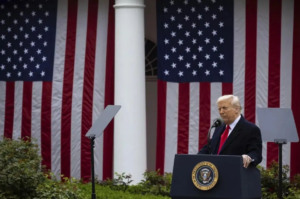
This series of tariff measures is clearly a continuation and escalation of the administration's "America First" policy (and runs counter to the "community with a shared future for mankind" that ESG's stakeholder values advocate and that China upholds). With globalization so far advanced (and with the globalization process now going through a period of adjustment, all the more reason to pursue a "rebalancing of globalization" through cooperation), national economies are closely linked, and a change in one country's trade policy can ripple through everything. The numbers produced by a simple Excel sheet in fact foreshadow upheaval in the global economic order; the butterfly effect set off by the "tariff" card goes far beyond its intended role as a "bargaining chip". The East has the saying "kill a thousand of the enemy and lose eight hundred of your own"; the West has the "Pyrrhic victory"1: even when a short-term "tactical goal" is achieved, the capacity for sustainable development is weakened at the same time.
Countries have responded to the administration's tariff pressure in different ways. Some have chosen tough countermeasures to protect their interests; others have chosen negotiation, seeking further talks with the United States. These varied responses reflect not only countries' different positions and attitudes on trade policy but also the profound changes under way in the global economic order. Many countries may not, as Trump had hoped, be "so cowed by high tariffs that they quickly bow and submit, begging for breathing room".
Behind what looks like a simple trade war lies profound economic and social change. It is not only the comeback struggle of "shareholder primacy" but also the growing pains of change driven by "stakeholder values". Below, we analyze the episode in three parts: a review of events, a policy-shift perspective, and a values-driven perspective.
Review of events: a new global tariff storm
On 2 April 2025, the Trump administration announced its "reciprocal tariff" policy. Its core elements:01 Tariff structureA 10% baseline tariff on all imported goods (effective 5 April);
Higher additional rates for the 60 countries with the highest trade deficits with the US, for example China (54% in total including the existing 20%), Vietnam (46%), the EU (20%) and Japan (24%) (effective 9 April);
Extra tariffs on specific industries (such as steel, aluminium and autos), for example a flat 25% tariff on imported cars and parts (effective 3 April).
Protect US manufacturing with tariff barriers, bring industry back home and reduce the trade deficit;
In the name of "fair trade", pressure trading partners to accept US-led rules, while building political capital for the 2026 midterm elections.
Economic shock: pushing up US inflation (CPI expected to rise by 1.5 to 3 percentage points)2 and increasing the risk of stagflation; global trade could shrink by 1.8%2, and the risk of supply chain disruption rises;
Countermeasures: China, the EU, Canada and others have launched retaliatory tariffs; for example, China has raised tariffs on US agricultural products and energy, and the EU plans tariffs on USD 26 billion of US goods3;
Industrial chain restructuring: global supply chains are being restructured faster, for example Tesla is expanding its Mexico plant and China's textile industry is shifting to Southeast Asia4.
The administration's tariff policy is not without method; it has clear goals and targets. Its primary goal is to reduce the US trade deficit: by raising tariffs on imports, it makes foreign goods more expensive in the US market, reducing their competitiveness and boosting consumption of American products. The administration also seeks to use tariffs to protect America's key industries, such as steel and aluminium, and to stop foreign competitors from capturing market share with low prices.
However, the policy has not delivered the results the administration hoped for. Instead, it has provoked strong reactions from trading partners around the world, which have retaliated with tariffs on US goods, intensifying the global trade war.
Facing US tariff pressure, China, one of the world's major trading nations, responded quickly. To defend its national interests and the multilateral trading system, the Chinese government was compelled to take reciprocal and necessary countermeasures to protect its legitimate rights and interests. Besides China, important US trading partners such as the EU, Canada and Mexico have also adopted retaliatory tariffs. By raising tariffs on US goods, these countries are trying to push the United States to abandon its unilateral trade policy (comparable to the one-sided interest orientation of "shareholder primacy"). At the same time, these countries have strengthened economic cooperation with others to soften the impact of US tariffs (a stakeholder orientation that seeks to work with other stakeholders). Meanwhile, international bodies such as the World Trade Organization (WTO) have repeatedly called on countries to resolve trade disputes through dialogue and consultation and to avoid further escalation.
This trade war is a contest of national interests and, even more, a reshaping of the global economic order. While defending their own interests, governments also need to consider the interests of the global economy as a whole; only then can a "shared benefit, win-win" outcome be achieved.
The trade war is also a wake-up call, reminding us to pay more attention to "rule-building" (the G in ESG, that is, "global governance" in the world context). We need to strengthen international cooperation, jointly set and abide by "fair, just and transparent" global trade rules, and create a "diverse, equal and inclusive" international business environment, so as to uphold the global trade order and promote the sustainable development of the world economy.
A policy-shift perspective (global governance and US domestic governance):
"Shareholder primacy" made concrete: from open globalization to trade protectionismThe Trump administration's tariff policy (when we widen our view to global governance, the making of all kinds of policies by every country corresponds to the G dimension of ESG) marks a major shift in US global trade policy. The shift shows not only in specific policy measures but also in America's strategic repositioning in the global economy (strategy also falls within the G dimension of ESG).1. The era of open globalization
Over the past few decades, globalization has been the cornerstone of world economic development. By strengthening economic and trade cooperation, countries have shared resources and complemented each other's strengths, jointly driving global prosperity and development. In this period the multilateral trading system played an important role, giving countries a fair, just and transparent platform for trade (stakeholder values made concrete in the global governance system).
At the heart of the multilateral trading system is the World Trade Organization (WTO). Since its founding, the WTO has promoted the liberalization and facilitation of global trade through a set of trade rules. By joining the WTO, countries commit to its rules and enjoy the trade facilitation and market access it brings. Under this framework, trade between countries has grown ever more frequent and global economic integration has steadily deepened.
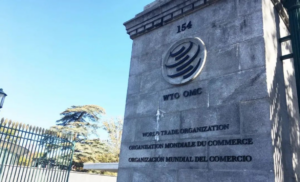
Image: WTO website
As globalization deepened, however, problems emerged. Some developed countries used their dominant position in global trade to adopt unfair trade practices that harmed developing countries. And some countries adopted protectionist measures to shield their own industries, restricting the free flow of international trade.
2. The rise of trade protectionism
It was against this background that the Trump administration's tariff policy came about. The administration believes that past globalization policies put the United States at a disadvantage in global trade, costing large numbers of manufacturing jobs and hurting the domestic economy. Hence the slogan "America First", an attempt to restore American economic strength through protectionist policies.
These policies quickly drew strong reactions from trading partners around the world, which retaliated with tariffs on US goods, intensifying the global trade war. This rise of protectionism not only undermines the global trade order but also deepens uncertainty in the world economy.
3. Behind the policy shift
The tariff policy has complex political and economic causes.
From a political perspective (that is, at the level of US domestic governance), the administration is using protectionist policies to deliver on campaign promises and consolidate its political position. It also hopes to divert attention from domestic tensions and win more voters' support.
From an economic perspective (that is, from the "shareholder interest" of the United States itself), the administration believes that past globalization policies left the United States at a disadvantage in global trade. It believes that measures such as higher tariffs can force companies from other countries and regions to invest and build factories in the United States, creating more jobs.
"In March 2025, TSMC, a company from China's Taiwan region, announced that in addition to its committed USD 65 billion investment it would invest an additional USD 100 billion over the next four years to build three new wafer fabs, two advanced packaging facilities and an R&D center in Arizona, bringing its total investment to USD 165 billion, a record for a single foreign direct investment in US history.5"
4. Outlook
"Every crisis holds both danger and opportunity." What has happened cannot be changed; what decides the future is how countries respond (will they go backward or forward?). Globalization has brought the world shared prosperity but has also created new problems and risks. Now we should respond actively while reflecting deeply, turning crisis into opportunity: focusing on innovation-driven growth and industrial upgrading, investing more in technology innovation, nurturing new sources of economic growth and raising our position in global industrial chains.
A values-driven perspective (ESG stakeholder values):
From the diverse, inclusive "Statue of Liberty" to "America First"1. The diverse, inclusive "Statue of Liberty"
New York, often called the "capital of the world", has long been a symbol of multiculturalism and openness, and the embodiment of the "American spirit" as many imagine it. Walking its streets, you hear languages from all over the world, taste every kind of cuisine and feel different cultures meeting and mixing. This diversity shows not only in the city's character but is rooted in every aspect of its economic and social development.
In the economic sphere, New York has shown great inclusiveness and openness. As one of the world's major financial centers, New York brings together financial institutions and companies from around the world. They bring different cultural backgrounds, management philosophies and innovative thinking, jointly driving the prosperity and development of the US and global economies.
New York is also an important source of global technology innovation. It is home to many prestigious universities and research institutions and attracts large numbers of scientists and engineers from around the world, who exchange ideas and spark off one another to drive scientific progress and innovation.
2. MAGA and "America First"
In recent years, however, since the Trump administration took office, the slogan "America First" has resounded across the United States and the world. The idea stands in sharp contrast to the earlier diversity and inclusiveness and has sparked wide controversy. The core goal of the administration's "America First" agenda is to revive the US economy and protect domestic industries and jobs. To that end, it has taken a series of measures, including raising tariffs, renegotiating trade agreements and stepping up support for domestic industry, all aimed at protecting US interests through protectionism.
"America First" is in essence the business value of "shareholder primacy" of the past few decades made visible at the level of US domestic governance, and its implementation has markedly changed America's role in the global economy. The government now puts national interests ahead of the common global interest. This self-centred orientation not only raises the risk of a global trade war but may also lead to fragmentation and unbalanced development in the world economy.
3. The clash and convergence of values
The shift from diversity and inclusiveness to "America First" reflects a profound change in American social values (in fact, a regression from long-termism to putting short-term interests ahead). On the one hand, multiculturalism and inclusiveness still hold an important place in American society; they are the foundation of the United States as a nation of immigrants and an important pillar of its economic and social development, and it was precisely this diverse and inclusive orientation that once made the United States the world's pace-setting developed nation. On the other hand, as globalization accelerates and competition at home and abroad intensifies, some Americans have begun to question these values, believing they no longer meet the needs of an uncertain present.
Against this background, the "America First" idea emerged. It puts national interests above all and advocates protectionist policies to safeguard them. The idea reflects some real needs in American society, but it also has clear limitations and drawbacks.
To begin with, "America First" ignores interdependence in a globalized world. Today national economies are closely linked, and an economic shock in any one country can affect others. Pursuing one's own interests while ignoring those of others may ultimately lead to imbalance and instability in the global economy.
Next, "America First" readily triggers trade protectionism and unilateralism. When one country acts in its own interest and adopts protectionist policies, it easily provokes countermeasures and retaliation from others. Such trade wars not only harm every country's economic interests but can also damage the global trade order and the climate of cooperation.
4. Choosing values for the future
Faced with two such different sets of values, "diversity and inclusiveness" and "America First", we cannot help asking: which path should we choose? In fact, the two are not entirely opposed. In a globalized world, countries need to safeguard their own interests while taking account of others' legitimate concerns, achieving mutual benefit.
We should recognize that the Trump administration's tariff policy and the global trade war it has triggered are not just a contest in the economic sphere (not merely a game of trade policy; we should not be taken in by surface appearances) but a social transformation driven by values. In future, more attention should be paid to exchange and integration between cultures, to promoting the sustainable development of the global economy, and to meeting global challenges together through stronger international cooperation. At the same time, we must guard against the spread of protectionist thinking such as "America First". Protectionism cannot solve the underlying problems and may cause greater conflict and tension. Only by upholding a new type of international relations that is open, inclusive, broadly beneficial, balanced and win-win can we build a community with a shared future for mankind.
Notes and references:
[1] "Pyrrhic victory" is a term from Western history for a victory won at such a cost that it is little different from defeat. Its defining feature is that the victor loses so much that it forfeits its long-term advantage, and may even end up in a more dangerous position than if it had lost.
[3]An In-Depth Analysis of Trump's Tariff Policy (in Chinese) [4]The Economic Impact of the Trump Administration's New Tariff Policy (in Chinese) [5]An Extra USD 100 Billion: Is TSMC Set on Leaving, and Will It Back a 32% US Tariff? (in Chinese)WeCarbon's view
Editor's note
Human progress tends to move forward in waves and rise in a spiral. Both the cultural value of diversity and inclusiveness and the economic doctrine of shareholder primacy have their historical context and their reasons for being. The tariff policies of the Trump 2.0 era are a wake-up call for every country: the sum of everyone's losses outweighs your gain! They also keep people everywhere asking: what is a sustainable model of global development? What is a more win-win paradigm for global governance? The complexity of today's international situation requires us to move beyond either-or thinking. Facing global challenges such as climate change, the technology divide and resource distribution, no country can gain lasting security through unilateral action. Rather than building short-term defences behind trade barriers, it is better to take a more pragmatic approach: open channels of communication, explore a new type of international relations and build a truly robust network of global cooperation.
About the author
Ms. Mia Zheng:
Partner (China), WeCarbon
The initial Chinese expert on the expert group of the Global Impact Investing Network (GIIN)
Deputy Director, Academic Committee of the Green and Low-Carbon Technology Research Center, SJTU-UNIDO Joint Institute of Inclusive and Sustainable Industrial Development
ESG expert, CIECC Overseas Consulting Co., Ltd.
ESG think-tank expert, China Investment and Development Promotion Association
Affairs Coordinator, Shanghai Climate Week