
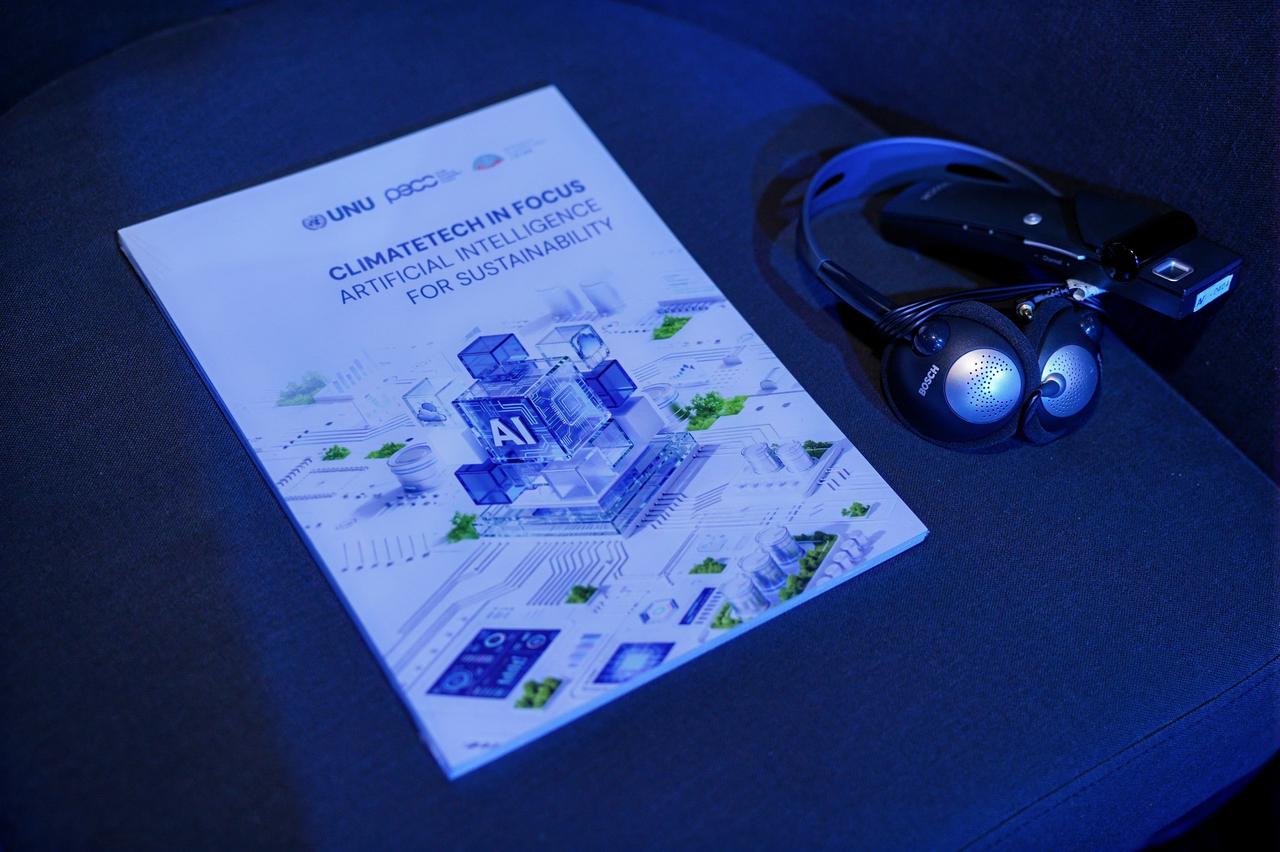
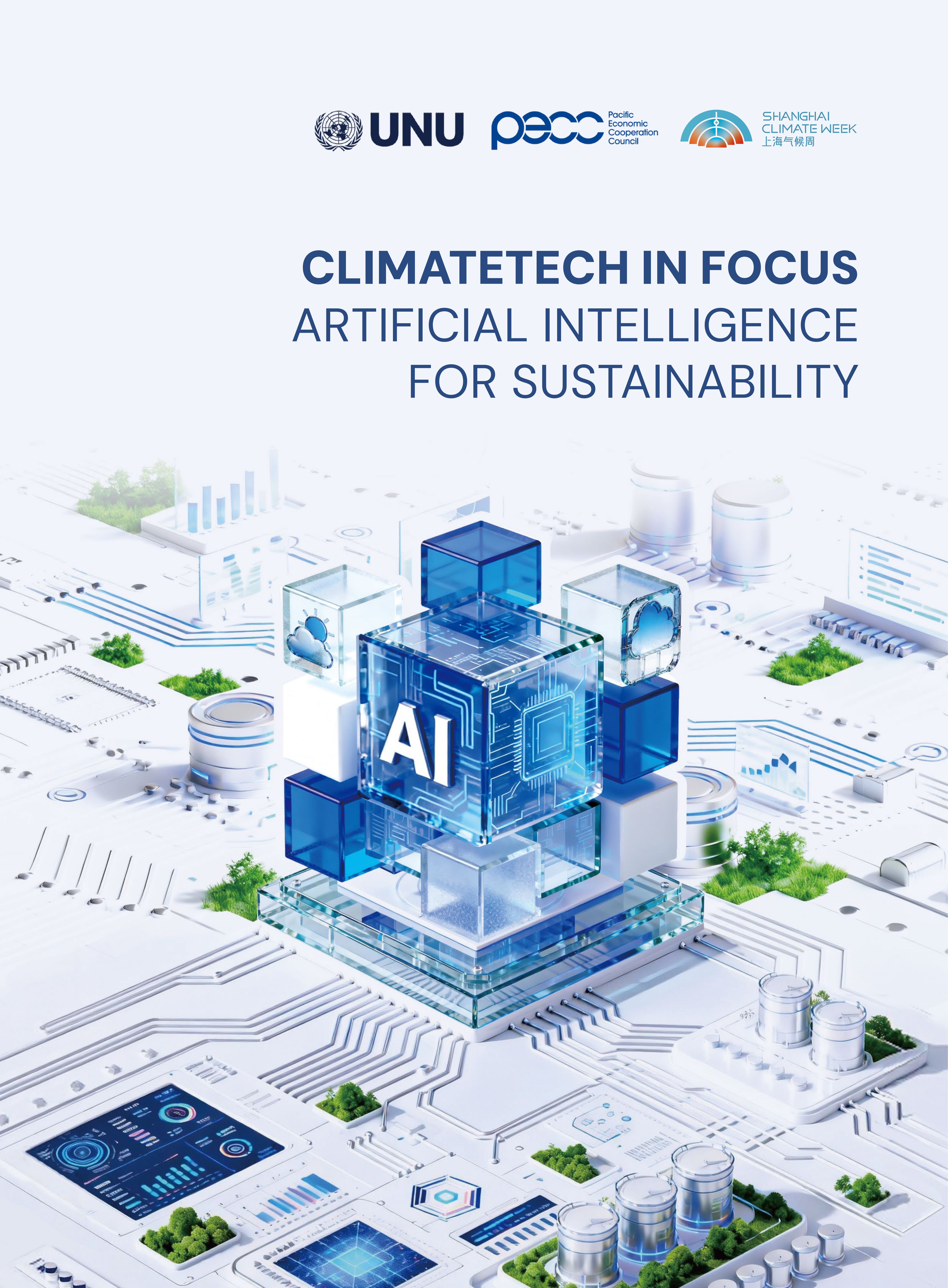
Video: Launch of the ClimateTech In Focus report
Abu Dhabi Sustainability Week (ADSW) 2026 took place in the UAE from 13 to 15 January. Political leaders, representatives of international organisations and business leaders from around the world gathered to deepen dialogue and advance practical cooperation on sustainability across energy, climate, infrastructure, finance and innovation.
On the morning of 15 January, the annual flagship study jointly initiated by United Nations and APEC-related institutions and Shanghai Climate Week, "ClimateTech In Focus: Artificial Intelligence for Sustainability", was officially launched at the Blue Forum, the closing event of ADSW. The report was presented by the Sino-International Entrepreneurs Federation (SIEF), with WeCarbon as Knowledge Partner and lead writer. WeCarbon founders Remoca Shi and Eric Ma were among the report's six lead authors and took part in the core research and writing. The report brings together insights from more than 120 experts from 28 countries and regions, including 26 heads of state and ministerial-level officials.
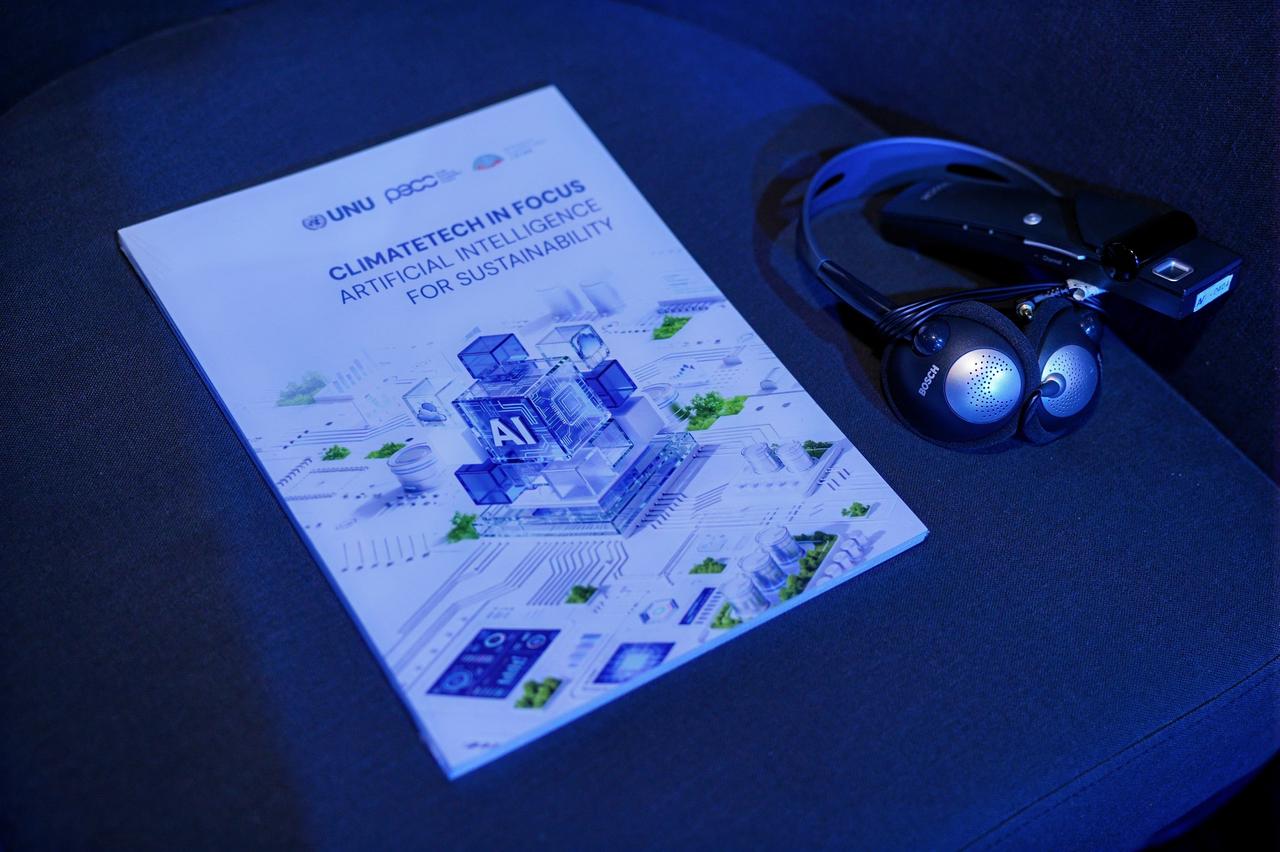
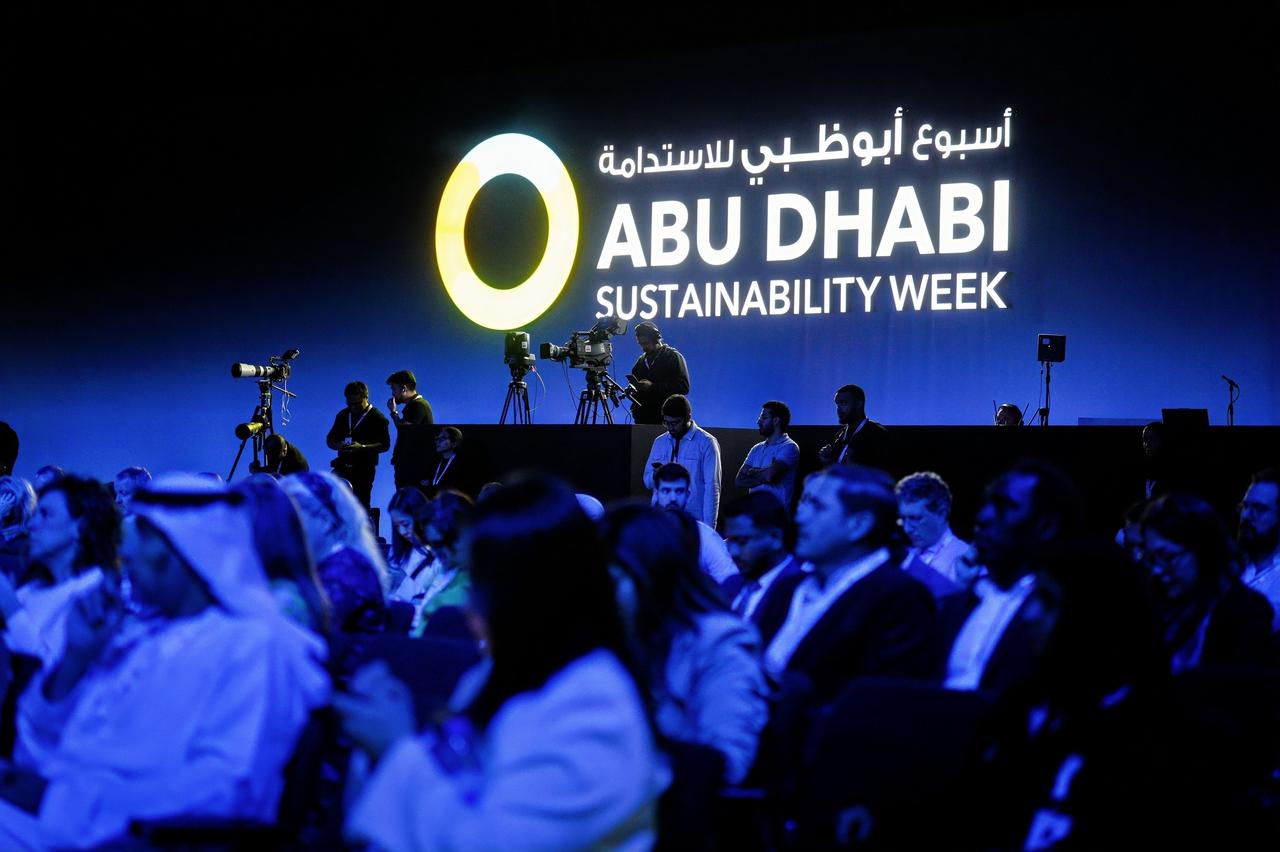
Photo: The report launch
The debut edition of the series, "ClimateTech In Focus: Innovations for a Greener Supply Chain", was launched on the international stage in 2024 at the 29th Conference of the Parties to the United Nations Framework Convention on Climate Change (COP29) in Baku, Azerbaijan. A Chinese edition followed during Shanghai Climate Week 2025, extending its reach in China and the Asia-Pacific region.
The 2025 edition takes "Artificial Intelligence for Sustainability" as its central theme and maps out AI-driven sustainability solutions. It examines in depth how AI is transforming key areas including energy systems, infrastructure, manufacturing, logistics, finance, certification, education and public governance. Alongside analysing AI's transformative role in climate mitigation and adaptation, it outlines practical pathways for turning the technology's potential into sustainability outcomes at scale. The report stresses that AI is not merely an isolated technological breakthrough, but a core engine for reducing uncertainty, improving the quality of decisions and coordinating complex systems under real-world constraints.
The report aims to give decision-makers and industry leaders around the world a practical, actionable framework, addressing key questions on how AI can advance sustainable development:
How far are we really from artificial general intelligence (AGI), and by what path will we get there?
How can hyperscale AI data centres become strategic national assets, and how can "computing-power and electricity coordination" resolve key issues such as siting, power supply, decarbonisation and financing? How can we prevent the concentration of data centres from creating new risks?
As AI moves from the role of "observer" towards that of "adviser", "coordinator" and "manager", what part do accountability, risk, investment and development strategy play in this shift?
How can AI optimise variable renewable energy (VRE) such as wind and solar, and reduce curtailment? How can electricity markets play a bigger role in the energy markets of the future?
As AI moves from "information technology" (IT) to "operational technology" (OT) and begins to control equipment, processes and systems directly, what new problems will arise, and how can we use it safely and reliably?
Beyond more attractive visa policies and access to financing, what systemic institutions and ecosystem conditions does a country or region need to retain high-calibre AI talent over the long term and unleash its innovative potential?
Every major technological and social transformation in history was initially met with resistance and fear. As the same cycle plays out with AI, the real questions are: how can we accelerate AI development while responding rationally to people's deeper concerns? And how, in global AI governance, can humanity choose collaboration and co-creation over division and walls?
The report also notes that, although AI technology is evolving rapidly, its deployment in sustainable development still faces institutional, operational and governance bottlenecks. Taking a cross-disciplinary perspective, it examines the key factors in moving from "pilot demonstrations" to "impact at scale", including data governance, regulatory transparency, operational capacity, talent development and trust among innovators, regulators and users. The report pays particular attention to cross-border cooperation, industry use cases and inclusive innovation models, so that AI can effectively support sustainable development in emerging markets and resource-constrained regions.
Scan the QR code to download the report
As Knowledge Partner for the report, WeCarbon will remain rooted in climate technology and industry practice, deepen its exploration of AI applications in key sustainability scenarios such as energy and supply chains, and broaden both the depth of its topics and the scope of its practice in the coming year's research, working with partners to deliver more insightful and impactful research and to advance a more rational, efficient and inclusive model of sustainable development.