
EU CBAM · Global Trade
CBAM compliance services for exporters to the EU
The EU Carbon Border Adjustment Mechanism (CBAM) entered its definitive phase on 1 January 2026. Your EU customer files the CBAM declaration and buys the certificates, but the figure that sets the bill, the emissions embedded in your goods, has to come from your plant. WeCarbon helps exporters in China, the UAE and other non-EU countries measure that data, prepare it for verification and hand it over in the form EU importers need.
In short
- Who files: EU importers that bring in more than 50 tonnes of CBAM goods a year need the status of authorised CBAM declarant. Every year they declare the embedded emissions of their imports and surrender CBAM certificates to match.
- What they need from you: the embedded emissions of your goods, monitored per installation with the EU methodology and verified by an EU-accredited CBAM verifier. Without that, your buyer falls back on default values set by the EU.
- Key dates: verification reports can be issued from January 2027, certificates go on sale in February 2027, and the declaration for goods imported in 2026 is due by 30 September 2027.
- Sectors covered: cement, iron and steel, aluminium, fertilisers, electricity and hydrogen.
The rules
What CBAM requires from 2026
CBAM puts a carbon price on the emissions embedded in certain goods imported into the EU, so that imports carry the same carbon cost as goods made inside the EU under the EU Emissions Trading System (EU ETS). From October 2023 to the end of 2025 it ran in a transitional phase, in which importers filed quarterly reports on embedded emissions but paid nothing. Since 1 January 2026 the definitive regime applies, and with it a financial obligation.
Importers of CBAM goods, or their indirect customs representatives, that import more than 50 tonnes a year must apply for the status of authorised CBAM declarant. They buy CBAM certificates from the national competent authority in their EU country. The certificate price follows the auction price of EU ETS allowances: a quarterly average in 2026 and a weekly average from 2027. Each year they declare the emissions embedded in their imports and surrender the matching number of certificates. If a carbon price has already been paid during production, the corresponding amount can be deducted.
The scope may widen. In December 2025 the European Commission proposed extending CBAM to certain downstream goods and adding anti-circumvention measures (proposal COM(2025) 989). It is a proposal, not yet law, but makers of steel and aluminium products have reason to start collecting data now.
1 January 2026
The definitive regime starts. Importers apply for authorisation; operators of installations outside the EU start monitoring and calculating embedded emissions.
April 2026
National accreditation bodies in the EU begin accrediting CBAM verifiers.
September 2026
Accredited verifiers can register in the CBAM Registry and start verification work, including document reviews and site visits.
January 2027
Verifiers can issue verification reports, and operators can share them with declarants.
February 2027
Declarants can buy CBAM certificates on the common central platform.
30 September 2027
Deadline for the CBAM declaration covering 2026 imports and for surrendering the certificates.
Where exporters come in
The importer declares. The data comes from you.
Under CBAM the legal obligation sits with the EU importer, but the importer cannot measure the emissions of a furnace or a kiln it does not run. For each declaration it has two options: report actual emissions, verified, or use the default values published by the EU.
Actual emissions are monitored and calculated by the operator of the installation outside the EU, following the CBAM methodology. They are then checked by an independent verifier accredited by an EU national accreditation body, and verification is done at the level of the installation where the goods are made. Default values are set by the EU per product and do not reflect how your own plant performs. If your installation is cleaner than the default, verified actual data is how your buyer can show it, and how you stay competitive against other suppliers.
So that operators do not have to send the same data to every customer, the CBAM Registry has a portal for operators of installations outside the EU (O3CI). Operators register, upload their installations and emissions data once and share it with declarants, with confidential treatment of business-sensitive data. Declarants then pull the verified figures into their declarations.
What to prepare
What exporters should prepare now
Whether you sell steel to a distributor in Rotterdam or aluminium to a manufacturer in Germany, the groundwork is the same. Start with the products, then the plant, then the handover to your buyers.
- Map your CBAM goods
- List which of your products fall under CBAM by customs code, which installations make them and which EU customers buy them. Ask your customers whether they import above the 50-tonne threshold.
- Monitor at installation level
- Define the production processes and boundaries of each installation, and collect activity data: fuels, raw materials and precursors, electricity and output. The EU methodology is set out in Implementing Regulation (EU) 2025/2547.
- Compare with the default values
- Calculate the embedded emissions of your goods and set them against the EU default values for the same goods. The gap tells you what verified actual data is worth to your buyers.
- Register in the CBAM Registry
- Register as an operator of an installation outside the EU, so you can share data with declarants through the registry instead of by email and spreadsheet.
- Book verification
- Arrange verification with a CBAM verifier accredited by an EU national accreditation body. The verifier reviews your monitoring approach, calculations and evidence, and may visit the site.
- Document any carbon price paid
- If you pay a carbon tax or take part in an emissions trading system at home, keep the evidence. Your buyer may be able to deduct that price.
- Agree the handover with your importers
- Settle the format, timing and confidentiality of the data you send, and who answers questions from the authorities.
- Plan reductions
- Lower embedded emissions mean fewer certificates for your buyer to surrender, which makes your goods cheaper to import than those of a higher-emitting competitor.
How we help
How WeCarbon helps with CBAM compliance
Our team takes exporters through the process, and CBAM declarations can be drafted with Formist, our AI agent. The work follows four steps.
Declare
We help you measure and organise production and emissions data and turn it into the reports and forms your EU importers need. We map production processes by industry and product type, record the source of each emission factor, link product data to production reports and calculate embedded emissions. The declaration documents can be drafted with Formist.
Certify
We work with established certification bodies on product carbon footprint (PCF) and CBAM certification, and prepare your data and evidence for verification by an accredited CBAM verifier.
Reduce
We help plan changes at the factory that lower the carbon footprint of your products, and with it the CBAM cost your buyers carry.
Deduct
We help you track and document any carbon price already paid in the country of production, which your buyer may be able to deduct from the certificates it must surrender.
Importers can send us their suppliers' contacts; we collect and organise the data that comes back. If an EU authority asks about a report, our team helps prepare the response.
We also train the people around exporters. In May 2024 our founder Eric Ma gave a session on the EU CBAM rules and related banking services for Bank of China in Shanghai, to senior managers and the heads of its free trade zone units.
Exporters in China
CBAM for China exporters
Our CBAM work in China is run from our Shanghai office, and it is tied into the platforms that Chinese exporters and the authorities around them already use.
In July 2024 WeCarbon's cross-border green compliance services went live on the Shanghai Green and Low-Carbon Supply Chain Public Service Platform, which the Baoshan District government built with the CN100 green and low-carbon supply chain alliance. Companies on that platform can reach WeCarbon directly from its carbon reduction section.
In September 2024 Shanghai E&P International, which develops and operates the Shanghai Digital Port Infrastructure, named WeCarbon a whitelisted service provider for cross-border green trade compliance on the Shanghai Electronic Port. Together we released a self-assessment tool that screens a company's exports against green trade rules in the EU, the US, the UK, Australia and other markets, with carbon border measures such as CBAM as a focus, and suggests next steps.
Exporters in the UAE and GCC
CBAM for UAE and GCC exporters
Aluminium, iron and steel, fertilisers and cement are all CBAM goods, so producers in the UAE and the wider Gulf that sell them into the EU receive the same data requests as anyone else. The rules do not change by country of origin: the EU importer declares, and the operator of the installation supplies embedded emissions verified by an EU-accredited verifier, or the importer uses the default values.
The deduction for a carbon price applies where a carbon price has actually been paid during production, so check what applies in your country before counting on it.
Our Dubai office is at DIFC Innovation One. Gulf exporters work with us through the same process described above, with a team in their own time zone.
Related product
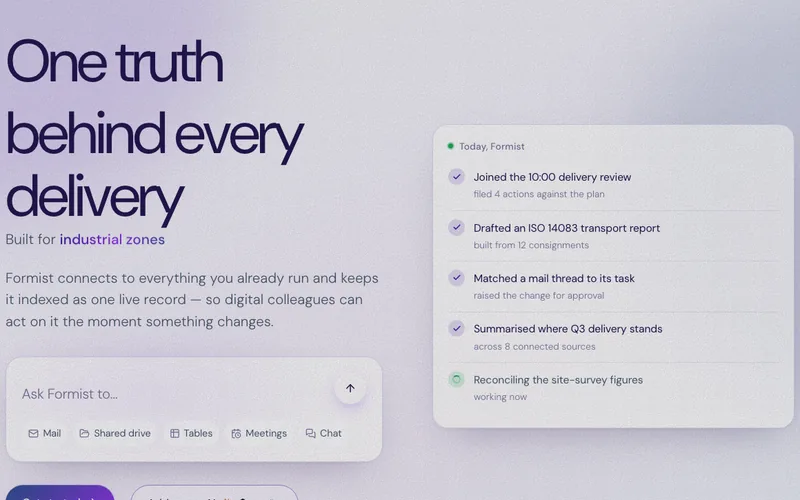
Draft CBAM declarations with Formist
CBAM declarations and other trade compliance forms can be drafted with Formist, our AI form agent. If your team prefers to prepare filings in-house with software, start there. If you want people to do the work with you, that is the service described on this page.
FAQ
CBAM questions from exporters
Do exporters outside the EU have to file CBAM declarations?
No. The declaration is filed by the authorised CBAM declarant, which is the EU importer or its indirect customs representative. Exporters and producers outside the EU supply the embedded emissions data that goes into it, and can register in the CBAM Registry as operators of installations outside the EU to share it.
What CBAM data does my EU customer need from me?
The emissions embedded in the goods you sell, calculated per installation with the EU methodology, and a verification report from an EU-accredited CBAM verifier. If you paid a carbon price at home, evidence of that payment as well.
What happens if I cannot provide verified data?
Your customer can declare using the default values set by the EU. These do not reflect your plant's performance. If your emissions are lower than the default, your buyer pays for emissions you did not produce, and a supplier with verified data may look cheaper.
When are the CBAM deadlines for 2026 imports?
Verification reports can be issued from January 2027 and certificates can be bought from February 2027. The declaration covering 2026 imports is due by 30 September 2027, when the certificates must also be surrendered. Verification takes time, so monitoring should already be running.
Which products does CBAM cover?
Selected goods in six sectors: cement, iron and steel, aluminium, fertilisers, electricity and hydrogen. The European Commission has proposed extending the scope to certain downstream goods; that proposal is not yet law.
Who verifies CBAM emissions data, and how does WeCarbon help?
Verification is done by an independent verifier accredited by an EU national accreditation body. We help you prepare the monitoring, calculations and evidence the verifier will review, support you through verification, and work with established certification bodies on product carbon footprint and CBAM certification.
Are the rules different for exporters in China or the UAE?
No. The same CBAM rules apply to exporters in China, the UAE and other countries outside the EU. What differs is whether a carbon price is paid where you produce, which affects the deduction your buyer can claim.






Accelerate your green transition today
Let us help you create competitive advantages through sustainability, build resilience against climate and supply chain risks, and streamline your path to a sustainable future.