
Climate investment and finance covers investment and financing activities that guide and encourage more capital towards addressing climate change, and it is an important part of green finance. In recent years China has steadily stepped up its action on climate change, and progress towards its sustainability goals has accelerated. Since the Kyoto Protocol entered into force, attention to carbon finance in China has also grown markedly. In 2020, China issued a dedicated policy document on climate investment and finance, defining the term and the scope of support. At the end of 2021, the Climate Investment and Financing Pilot Work Plan issued by the Ministry of Ecology and Environment and eight other ministries called for cultivating a group of climate-friendly market players and exploring a range of development models for climate investment and finance. In August 2022, China announced its initial list of climate investment and finance pilot areas: 23 cities and areas were selected, comprising 12 cities, 4 districts and 7 state-level new areas.
The Global Impact Investing Network (GIIN), a global champion of impact investing, planned to start working with Winrock International in January 2023 on a new set of IRIS+ "Climate Adaptation and Resilience" (CAR) impact investing metrics. These are vital for helping policymakers, regulators, investors, companies and the public sector better measure the wide-ranging impacts of climate change. They can also serve as a guiding standard for climate investment and finance pilots, enabling investors and investment institutions of all kinds to make informed, climate-adaptive investments.
On 10 January 2023, Mia Zheng, Partner (China) & CEO of WeCarbon, was invited to join the new expert working group for nearly six months of work on developing metrics for assessing climate change investment and finance. The working group will consult widely and in depth with different stakeholders to identify gaps in Impact Measurement and Management (IMM) in global climate adaptation and climate resilience.
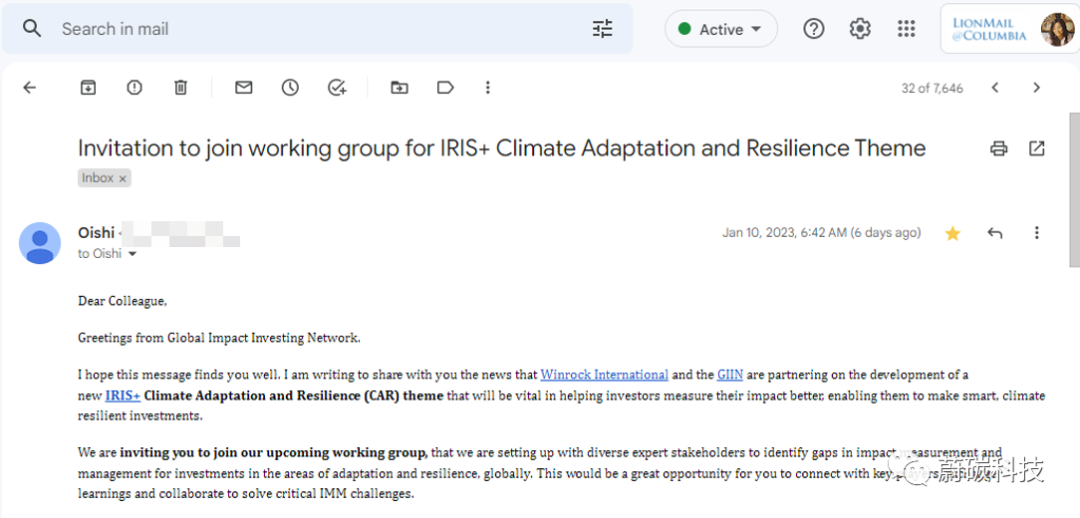
Figure 1: Invitation letter for "Developing Climate Change Investment and Finance Assessment Metrics"
Ms. Zheng had previously been invited three times to help develop impact investing metrics in different fields, including Climate Mitigation, Energy Access and Gender Lens. Using an environmental, social and governance (ESG) framework, Ms. Zheng also developed an assessment framework for climate-related community investment projects for the Federal Reserve Bank of New York (New York Fed), and helped formulate the New York Fed's climate-related investment strategy for 2021 to 2025. The framework is now used as internal training material across all twelve Federal Reserve districts, as a reference for the Federal Reserve's internal investment departments and for asset owners, asset managers and regulators in the market.
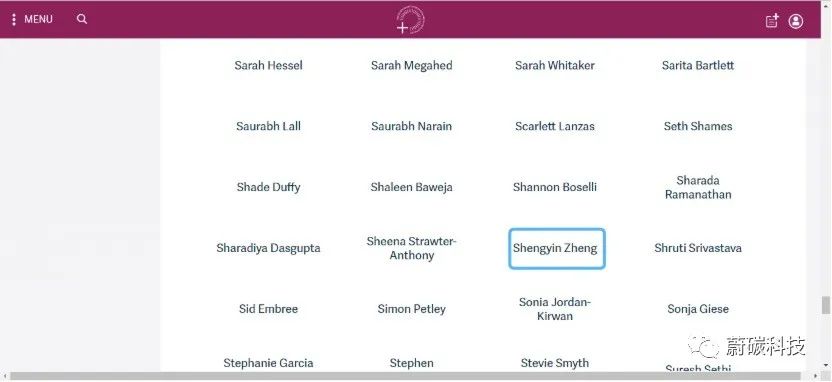 Figure 2: Expert list for "Developing Climate Change Investment and Finance Assessment Metrics" (image from the GIIN website)
About GIIN
The Global Impact Investing Network (GIIN) is a global organisation of impact investors dedicated to increasing the scale and effectiveness of impact investing around the world.
About IRIS+
IRIS is an impact measurement and management system launched by the GIIN in 2009 to give investors standardised tools for assessing the actual impact of the projects in their portfolios. More than 5,000 organisations worldwide now use IRIS, ranging from impact investing funds set up by institutional investors such as JPMorgan Chase and BlackRock to social-sector organisations such as the Ford Foundation and the Rockefeller Foundation. As the impact investing industry grew rapidly, and to better understand baseline return expectations for investment themes and strategies across sectors, IRIS+ emerged after several rounds of iteration on the IRIS metric set. Built on a thematic taxonomy, it helps impact investors build a comprehensive system for assessing positive and negative impacts according to their impact categories, themes and strategic goals, so that they can meet their investment objectives.