
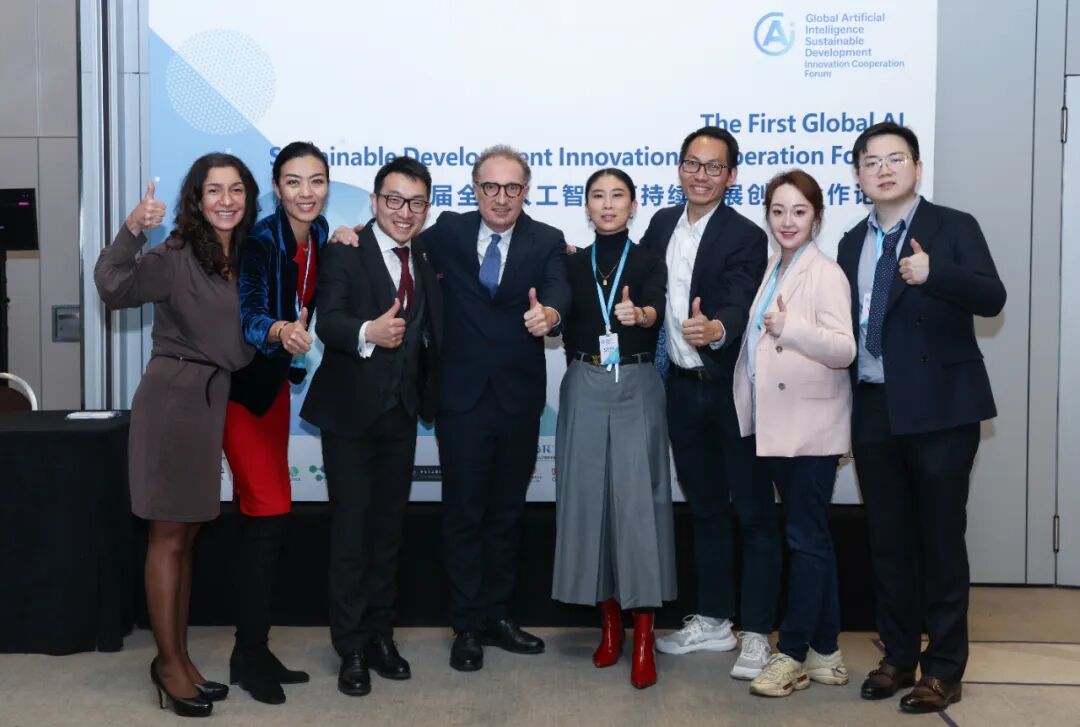
On 21 November 2025, the "inaugural Global Artificial Intelligence Sustainable Development Innovation Collaboration Forum" was held at Le Méridien near the Arc de Triomphe in Paris. Guided by the China Electronics Chamber of Commerce (CECC), the forum was jointly initiated by the CECC's Artificial Intelligence Committee and the Zhejiang Institute for Industry-Finance Collaborative Innovation in the New Era, with HEC Paris, HEC Alumni and the HEC Paris innovation and entrepreneurship ecosystem as strategic partners.
Under the theme "Building a new landscape of global governance, fostering a new ecosystem of industrial collaboration, and sharing the new dividends of technological innovation", the forum set out to help shape "an AI future that is a force for good, built on shared intelligence, responsible, inclusive and sustainable". More than 100 representatives of government, technology, industry, academia and finance from China, France, the United States, the United Kingdom and several other European countries gathered for in-depth exchanges on global governance, sustainable development, industrial collaboration and ethical standards in the age of AI. VS+ Accelerator, a China-France cross-border accelerator, was the lead organiser, and WeCarbon, as one of the co-organisers, worked with Argos Labs, ABCD Teck, Cibola Invest and the Sino-French AI Association to ensure the forum's success.
 Photo: The inaugural Global Artificial Intelligence Sustainable Development Innovation Collaboration Forum
01 Opening remarks
Wang Ning, President of the China Electronics Chamber of Commerce, opened the forum, stressing that AI development must follow the principles of responsibility, safety, controllability and openness. AI is a global endeavour that calls for open cooperation, he said; China and Europe have natural, complementary strengths in AI innovation, ethical governance and industrial collaboration, and China's vast range of application scenarios, combined with Europe's strengths in standards, regulation and basic research, could form a positive cycle of interaction in the future. Mr. Wang also introduced the CECC and expressed the hope that the forum would serve as an international cooperation platform to further strengthen China-France cooperation in AI. He proposed establishing a global alliance for sustainable AI collaboration to jointly study industry standards, key technologies and safety frameworks and contribute to the healthy development of AI worldwide. He also invited participants to the "Global Intelligent Machinery and Electronic Products Expo" in Macao and Zhuhai, China, from 4 to 6 December, to see the progress of China's AI industry up close.
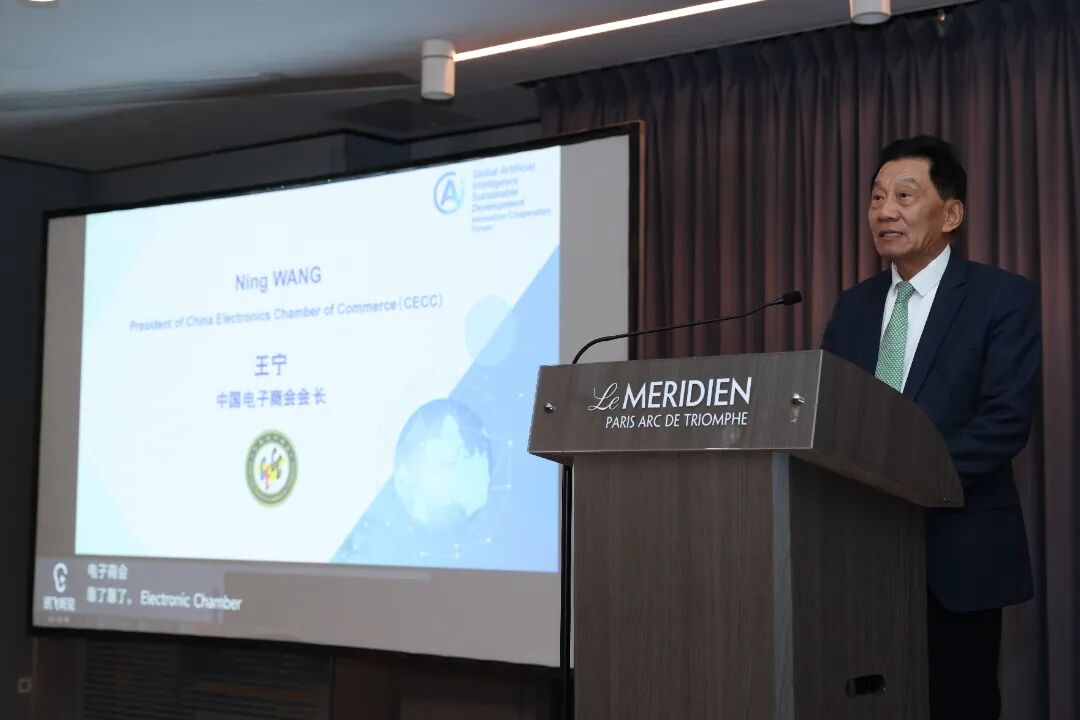
Photo: Wang Ning, President of the China Electronics Chamber of Commerce, delivers the opening address
Next, Philippe Oster, Senior Executive Director (Head of International Affairs) of HEC Paris, delivered remarks, thanking the organising team and the CECC's AI Committee for initiating the forum. AI is reshaping energy, supply chains, industrial models and global governance, he said, and these are challenges no country or institution can solve alone: cross-sector collaboration, knowledge sharing and systemic understanding are the way forward. Bringing together prominent AI researchers, international technology figures, entrepreneurs, investors and government representatives to discuss responsible innovation and the energy transition, the forum was a key step in advancing global sustainable development. HEC's innovation ecosystem is not only one of Europe's major start-up hubs but also an important driver of French start-ups, reflecting the close connection between academic research and innovation practice. He noted that the forum's goal is to foster genuine cross-border mobility, enabling Chinese and European entrepreneurs to enter new environments, meet new partners and find new opportunities, and so unlock the full potential of cross-border innovation.
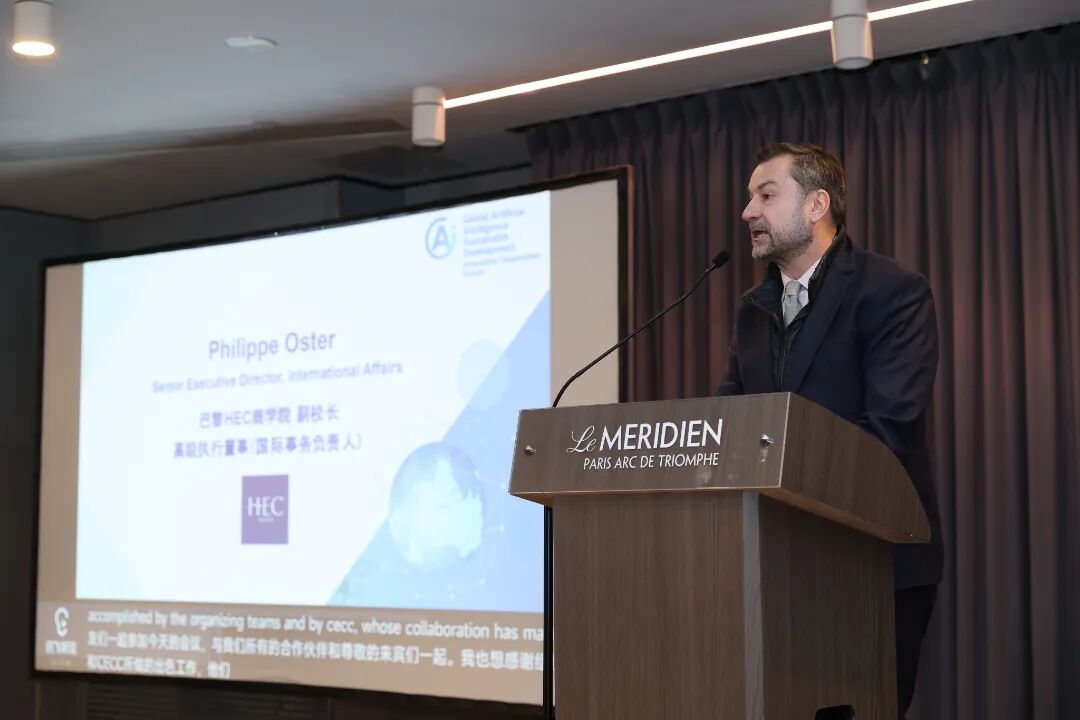
Photo: Philippe Oster, Senior Executive Director of HEC Paris, delivers opening remarks
02 Keynote session
Myriam Maestroni, Founder and President of the e5t Foundation and e5t Education and former CEO of Économie d'Énergie (EDE), gave a talk titled "A China-Europe Perspective: Energy Transition and Sustainable Development – Can AI Be an Accelerator?". AI is ushering the world into a new "energy-technology" era, she said: while it increases energy consumption, it also offers key solutions for improving energy efficiency and decarbonising. In the face of the climate crisis and multiple global shifts, she stressed, only by relying on renewable energy, carbon capture technology, the circular economy and cross-border collaboration can AI truly become an accelerator of sustainable development.
Inge Kerkloh-Devif, Senior Executive Director of the HEC Paris Innovation & Entrepreneurship Institute and Co-lead of CDL Paris, gave a dedicated presentation on Europe's innovation and entrepreneurship ecosystem and the strengths of HEC's ecosystem. European innovation is accelerating, she said: Europe has more "unicorn cities" than any other region, and climate tech is a particular strength of European innovation; Paris ranks second in Europe as a technology and innovation hub, behind only London; and Station F has become one of the world's major start-up incubators, home to more than 1,000 start-ups. The HEC entrepreneurship ecosystem supports over 600 start-ups a year, has produced 16 unicorns and attracts nearly EUR 2 billion in investment annually. The "secret" of its innovation success is a quadruple-helix model of collaboration between "academia + investment + business + government".Alex Carré de Malberg, Managing Partner of the independent European investment bank CarlSquare, in a talk titled "Reindustrialising Europe: New Opportunities in Cross-Border Investment and M&A", observed that Europe is under intense "reindustrialisation pressure": industry accounts for just 14% of EU GDP and only 9.4% in France, and many companies face succession issues or are close to bankruptcy. Cross-border investment, especially China-Europe cooperation, will be a key force for reindustrialisation, with AI, robotics and energy technology the investment areas in highest demand. Many AI start-ups are entering the "valley of death" and need patient capital and cross-border markets; Chinese capital plus European markets makes for a highly complementary model of cooperation.
03 Roundtable discussions
The roundtable "Challenges and Responsibilities: Building a Responsible and Sustainable AI Future Together", moderated by Pei Li, President of the Digital & Blockchain Chapter of HEC Alumni, brought together five speakers from French academia, industry and urban innovation: Jean-Gabriel Ganascia, Professor at Sorbonne University; Emmanuel Goffi, Professor of Ethics at ISEP; Olivier Mousson, President of the Société d'encouragement pour l'industrie nationale (SEIN); Vahan Garabedian, Head of AI at IBM; and Nicolas Régnier, Founder of "Ville de demain".
On what will drive AI over the next decade, the speakers agreed that the focus must return to concrete applications, guard against blind optimism and take account of AI's hidden energy and social costs. On European AI sovereignty, Mousson said Europe must break out of "silo" collaboration and accelerate systemic innovation rather than rely on regulation alone. On global governance, Goffi and Ganascia stressed that AI values are hard to unify and that European regulation needs to be more pragmatic and based on real risks.
The panel reached three points of consensus: AI development is a combined question of technology and social systems; global rules must be based on mutual understanding rather than the export of values; and Europe can only hold its own in global competition by accelerating the integration of innovation. The discussion echoed the forum's core theme of "a responsible, sustainable and cross-cultural AI future".
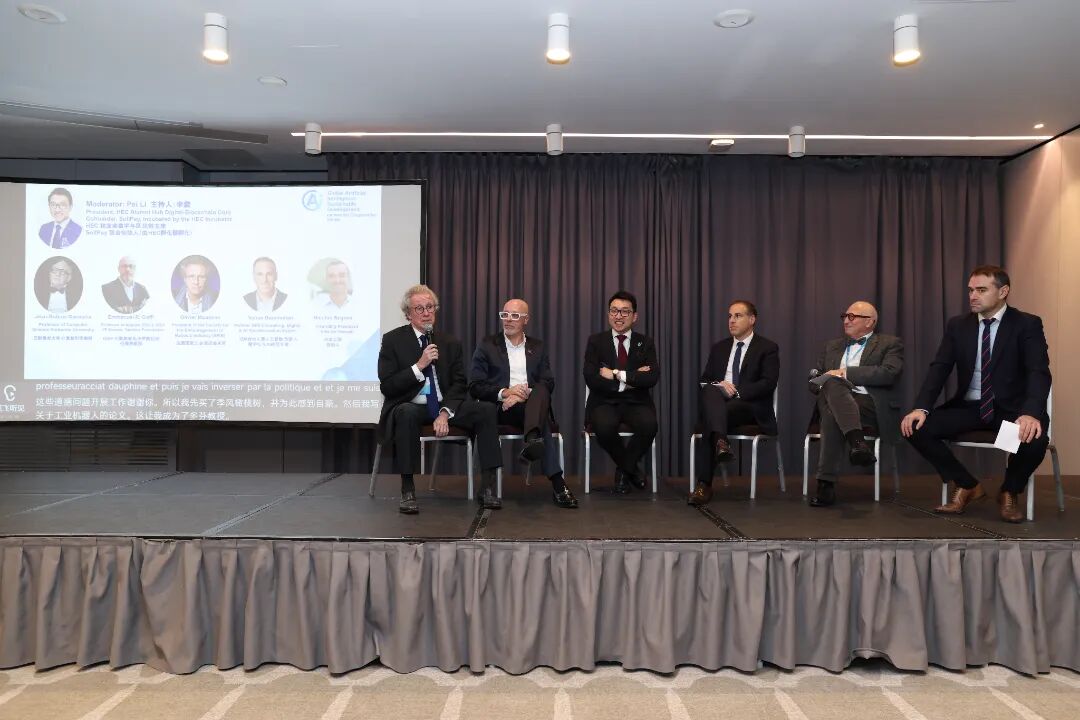
Photo: The roundtable "Challenges and Responsibilities: Building a Responsible and Sustainable AI Future Together"
At the roundtable "Embracing AI's Creative Destruction: Reinventing Industry in the Intelligent Era", moderated by Kevin Liu, General Manager EMEA of Cyclone Robotics, François Paulus, Co-founder of Breega; Anis Ben Mahmoud, CEO of Phoenix Robotics; Fred Sun, General Manager Europe of Tencent Cloud; Ghassan-Paul Yacoub, Professor at EDHEC Business School; and Thomas Yang, CEO of Argos Labs & SollPay, discussed from industry and investment perspectives how AI drives transformation and the opportunities for China-Europe cooperation.
The speakers noted that AI is not just an automation tool but a general-purpose technology that reshapes cognition, tasks and social structures. François Paulus highlighted how AI is giving rise to highly efficient, asset-light start-up models; Fred Sun said China's wide range of application scenarios can offer Europe practical reference points; Anis Ben Mahmoud noted that AI is enabling robots to become part of everyday services; and Thomas Yang shared how AI improves transparency and risk control in blockchain.
Participants agreed that China's strengths lie in application and execution and Europe's in research and ethical governance, and that the two sides are highly complementary, with great potential for cooperation in intelligent manufacturing, robotics, vertical AI and green computing infrastructure.
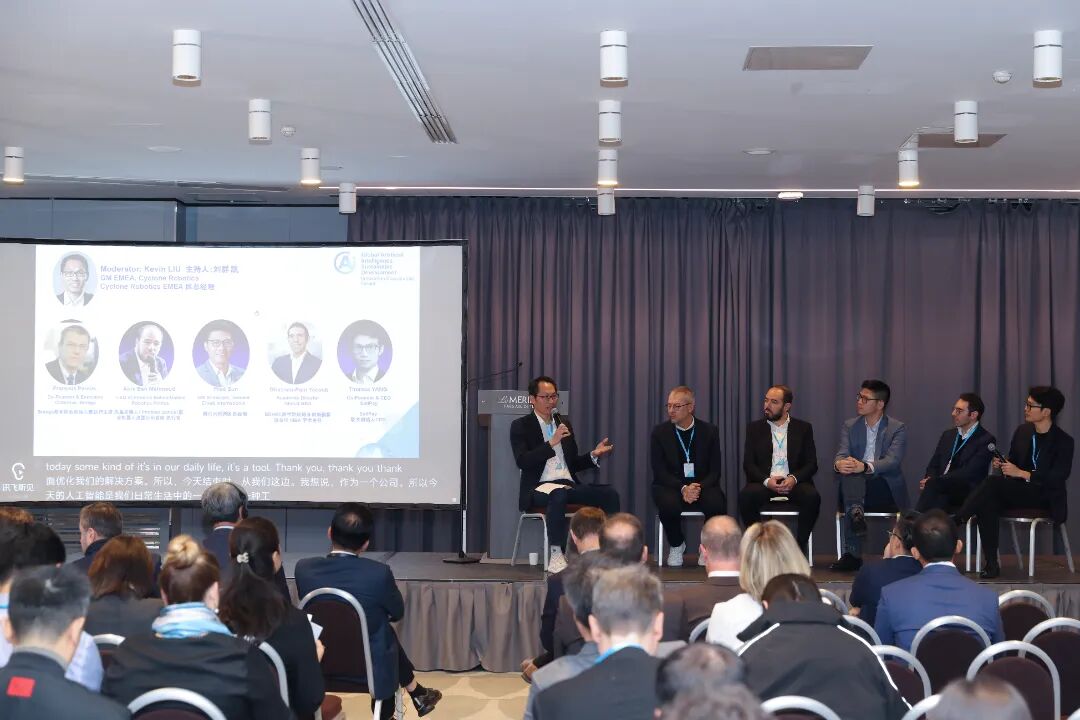
Photo: The roundtable "Embracing AI's Creative Destruction: Reinventing Industry in the Intelligent Era"
At the roundtable "The Convergence of AI and Green Energy: Innovation, Efficiency and Governance", moderated by Joël Ruet, who teaches at École polytechnique's innovation school and is Founder and Chairman of The Bridge Tank, speakers from energy, investment and sustainability discussed in depth how AI can drive the global energy transition.
Gabrielle Gauthey, a TotalEnergies executive, said AI is optimising grid dispatch, wind and solar forecasting and the efficiency of green hydrogen and storage, and reshaping urban energy governance. Jean Pasternak, CEO of Greentie, stressed that AI can improve the transparency of ESG disclosure, support green finance and speed up the commercialisation of climate tech. Gilles-Henry Garault, Vice-President of SEIN, said the industry of the future will be "sustainable intelligent systems", with AI playing a key role in manufacturing and the circular economy. Samir Guemmoud, an EAE executive, warned that data centre energy consumption has grown fortyfold and that AI is redefining how data centres are designed, cooled and coordinated with the grid, making them central to urban energy resilience. Ms. Yang Zhang, Co-founder and Managing Partner of Cibola Invest and WeCarbon's partner in France, said Africa could leapfrog the conventional energy stage and build AI-driven distributed energy systems directly. Chen Kan of Caitong Securities called for deeper China-Europe cooperation on green technology: Europe has technology but lacks capital, while China has both capital and markets. Only by linking "technology × markets × capital" and building mutual trust, he said, can the two sides cross the "valley of death" and advance the global green transition together.
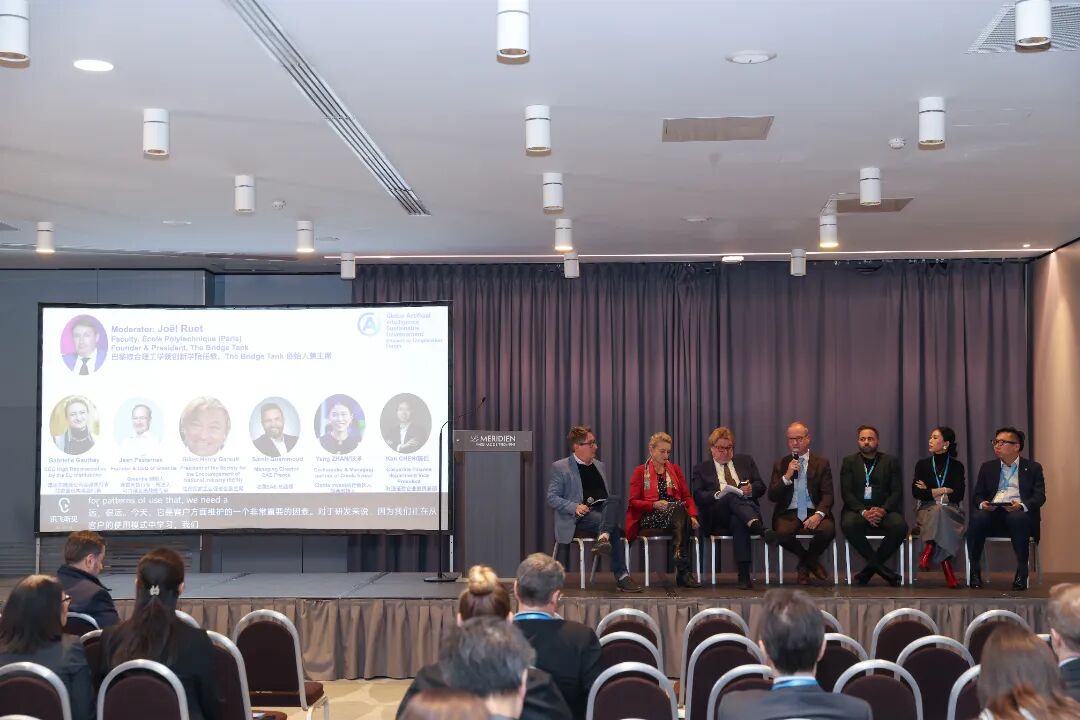
Photo: The roundtable "The Convergence of AI and Green Energy: Innovation, Efficiency and Governance"
As global supply chains are restructured, climate pressures intensify and companies' ESG responsibilities grow, AI is becoming a core force changing how industries collaborate. At the roundtable "How AI Is Reshaping Global Supply Chains and Industrial Cooperation: Towards Decarbonised and Sustainable Production", moderated by Alexandre Borde, CEO of Cibola Partners, UNFCCC climate expert and WeCarbon's partner in France, speakers from government agencies, an automotive group, climate tech, international consulting and a global advertising group discussed how AI can drive supply-chain decarbonisation, strengthen ESG execution and shape brands and digital ecosystems.
Global supply chains face three major trends: decarbonisation has become a mandatory, system-wide undertaking (driven by EU rules such as the CSRD and CBAM); transparency is becoming key to companies' global competitiveness; and AI is becoming embedded across the whole chain, from demand forecasting and logistics optimisation to carbon accounting and supplier screening. Decarbonisation is no longer a cost but a market "entry ticket".
Arnaud Melilli Parayre, Head of Asia-Pacific at Choose Paris Region, said AI helps companies achieve compliance quickly in Europe. Eric Ma, Founder of WeCarbon, stressed that AI can automatically collect, track and model Scope 3 emissions, turning carbon emissions from "invisible" into "manageable", and that supply-chain competition in the future will play out on a "carbon efficiency index". Jiamiao Li, Head of AI and Engineering Strategy at Stellantis, said car manufacturing is shifting from an engineering problem to an algorithmic one. Sami Engel Mebazaa, Senior Partner at Effectus, noted that AI can anticipate climate risks and build resilient supply chains. Barbara Grabiwoda, Head of Innovation Strategy, AI Transformation and Business & Digital Strategy at Publicis Groupe, stressed that AI enables companies to measure product life-cycle impacts accurately, strengthening their sustainability communication and their voice in the market.
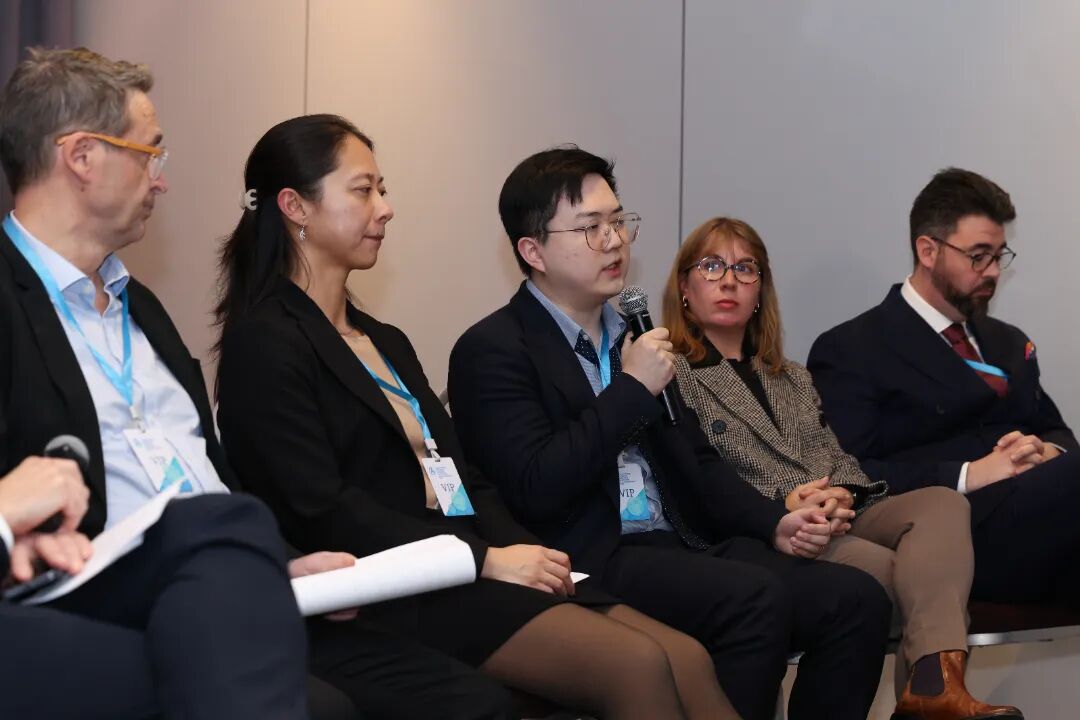
Photo: Mr. Eric Ma speaks at the roundtable "How AI Is Reshaping Global Supply Chains and Industrial Cooperation"
04 Launch of a global initiative
A highlight of the forum was the proposal by Liu Xiaoming, Chairman of the CECC's AI Committee, to establish the Global Alliance for Artificial Intelligence Innovation and Cooperation for Sustainable Development (GAISD). In his speech, he noted that while AI is driving industrial change, it is also widening the digital divide and aggravating data imbalances and algorithmic ethics challenges, and called for "AI to become a new engine for inclusive and sustainable development, not a driver of global inequality".
GAISD will focus on five areas: promoting green, low-carbon AI technology, taking part in global standard-setting, building sustainable AI applications in energy, healthcare, education and other fields, creating cross-regional talent exchange platforms and building open, multilateral collaboration mechanisms, and will advance practical cooperation through annual forums, joint laboratories and demonstration projects.
The initiative was widely welcomed by the Chinese and European institutions present and is seen as a global cooperation mechanism for sustainable AI launched by China in Europe, a positive step towards "shared global governance".
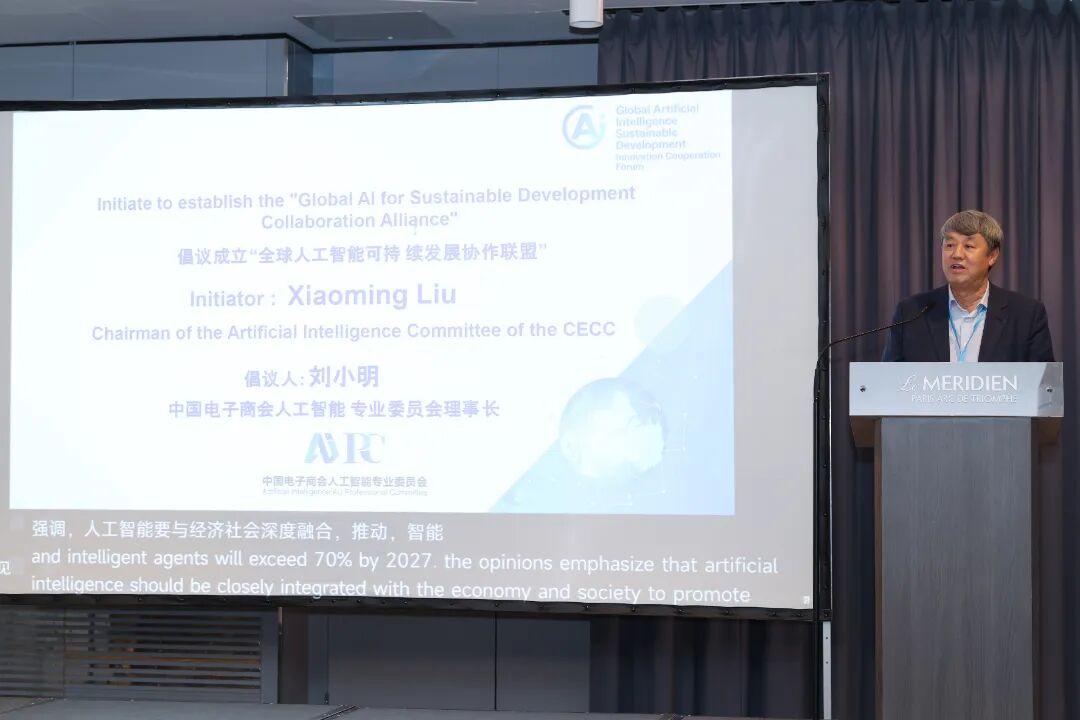
Photo: Launch of the Global Alliance for Artificial Intelligence Innovation and Cooperation for Sustainable Development
During the forum, Liu Xiaoming and Inge Kerkloh-Devif, head of the HEC Paris innovation and entrepreneurship ecosystem, signed a memorandum to jointly establish a "Global AI Sustainable Development Innovation Cooperation Center" in Paris and Hangzhou as a long-term base for GAISD, supporting project incubation, two-way acceleration, joint research and dialogue on cross-border governance. As one of GAISD's founding members, WeCarbon will continue to take part in and support the development of the centre in both Paris and Hangzhou, helping to advance more open, practical and forward-looking international cooperation.
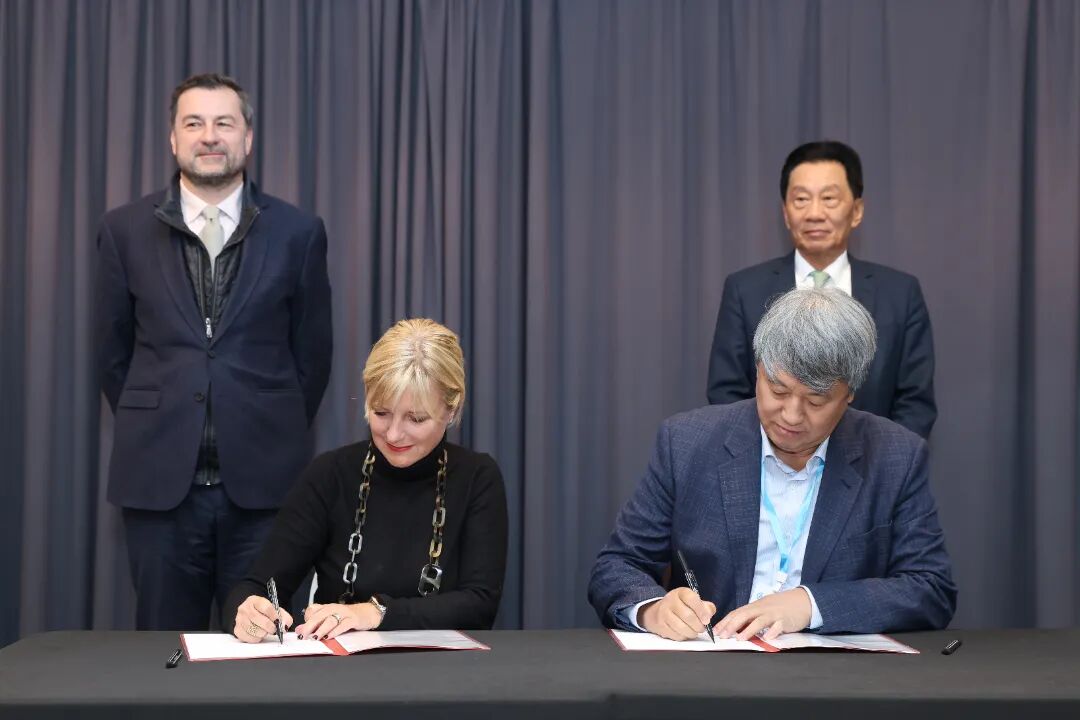
Photo: Signing of the memorandum of cooperation
05 Closing speech
In his closing speech, Hamilton Mann, recipient of a Thinkers50 Distinguished Achievement Award and author of Artificial Integrity, proposed that "Artificial Integrity" should become the core principle of AI governance, advancing AI that is trustworthy, safe and human-centred. AI is already a structural force in society, he stressed: large models not only generate content but also reshape behaviour and collaboration, and governments, businesses and academia need to build an international framework for "trustworthy AI" together.
06 Start-up pitches
During the forum, WeCarbon, LegOmnia, Udaress, Callendar, Jinko and other Chinese and European innovative companies presented their work in climate tech, legal tech, education tech and brain-inspired computing, demonstrating the great potential of AI for upgrading traditional industries and advancing sustainable development.
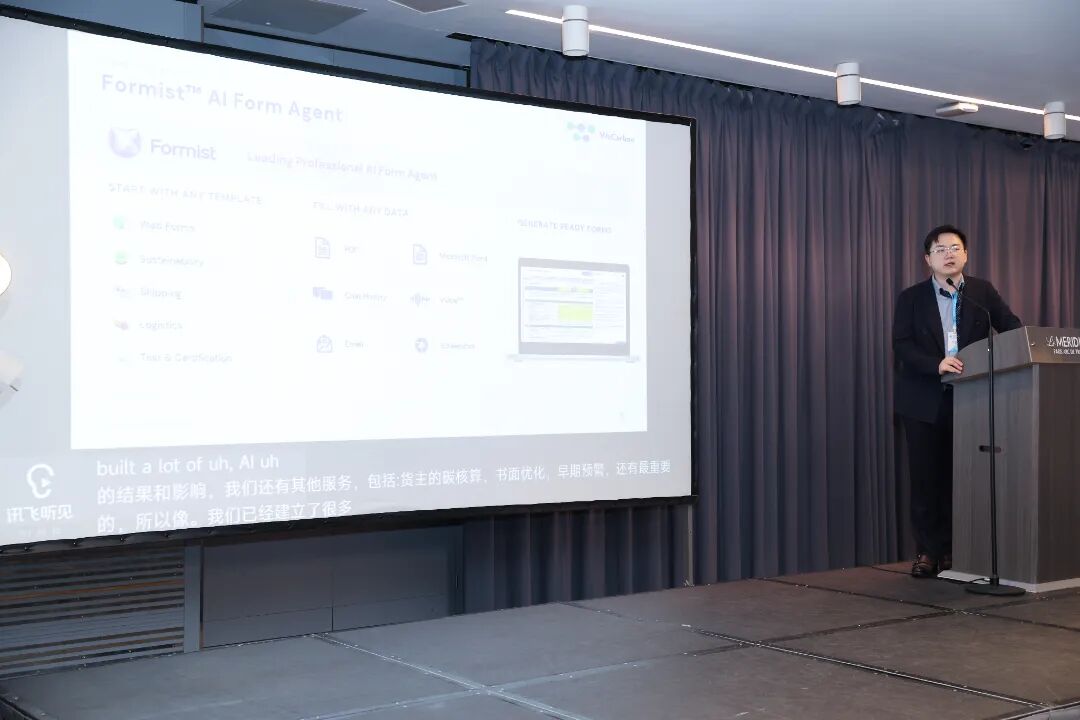
Photo: Mr. Eric Ma presents WeCarbon's AI innovations in the pitch session
07 Innovation showroom
The forum featured a dedicated "AI × Sustainable Development Innovation Showroom", bringing together Chinese and European research institutions and innovative companies. Advanced products on display, such as UBTECH's Wukong robot and Rokid AI smart glasses, spanned AI, mixed reality, medical technology, service robots and smart wearables. The showroom was a highlight of the forum, drawing many guests to try the products.
08 Dinner
After the forum, WeCarbon was invited to the dinner, where Founder Ms. Remoca Shi held in-depth conversations with dignitaries and AI experts and scholars on AI for sustainable development, climate tech cooperation and future industry trends.
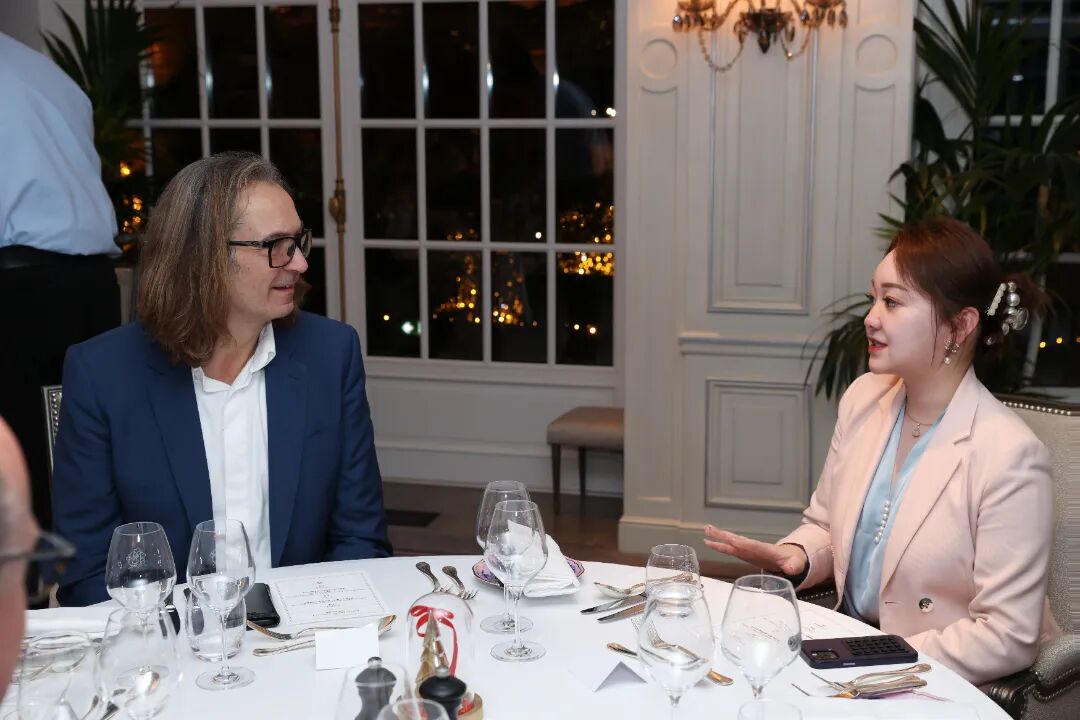
Photo: Ms. Remoca Shi in conversation with experts at her table during the dinner

Photo: Exchanges at the dinner
The success of the inaugural Global Artificial Intelligence Sustainable Development Innovation Collaboration Forum not only showcased AI technology and industry trends but also marked a new, institutionalised stage of China-Europe cooperation in AI and sustainable development. Estelle Han, European innovation adviser to the CECC's AI Committee, CEO of VS+ Accelerator and WeCarbon's partner in France, said the "Paris-Hangzhou Global AI Sustainable Development Innovation Cooperation Center" will serve as a bridgehead and accelerator for two-way cooperation between Chinese and European companies. Drawing on the two centres for end-to-end support on the ground and linking up local resources, it will help companies going overseas tackle challenges such as unclear policies, insufficient compliance, information asymmetry, cultural differences and high costs and risks, and deepen cooperation in energy, agriculture, healthcare, education and other fields, so they no longer have to "cross the river by feeling for the stones".
From a global initiative to a two-centre partnership, and from standards and governance to industry matchmaking, China is stepping onto the global technology stage with greater openness, confidence and responsibility, using the strength of its chambers of commerce to help more companies enter international markets and take part in shaping the common rules of the AI era. As one participant put it: "AI is not just a technology race; it is a new starting point for global cooperation."
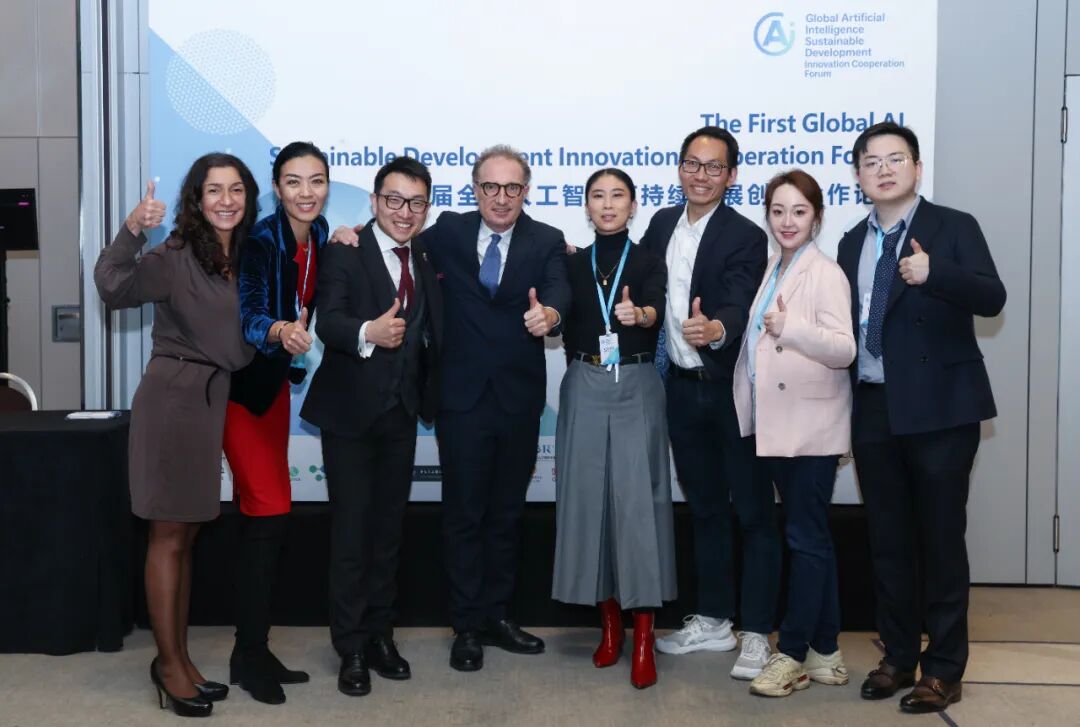
Photo: Members of the forum's executive committee