

ESG Assurance: The Cornerstone of Credible Sustainability Reporting
1. Why is ESG assurance becoming increasingly important?
The widespread adoption of ESG reports reflects the market's deepening focus on non-financial performance, especially sustainability issues, but their rapid growth has also raised challenges around data quality and credibility. When companies disclose ESG information today, even without any intention to misrepresent, differences in the disclosure standards they reference and in how they understand and interpret ESG indicators still make it difficult to effectively assess the accuracy of ESG information and its comparability across companies. In addition, regulators generally do not require ESG reports to undergo independent third-party verification, which limits their credibility and market acceptance.
Another key negative phenomenon fuelling controversy over ESG practice is "greenwashing": companies or financial institutions exaggerating their environmental contributions or sustainability performance, or spreading false and misleading information. Greenwashing has multiple causes, stemming both from flaws in the external investment environment and institutional mechanisms and from deeper problems such as weaknesses in companies' own governance. Through high-risk practices like greenwashing, companies selectively disclose positive information while avoiding negative facts, seeking to build a distorted positive image. In essence, it exploits institutional gaps in the early development of ESG mechanisms to obtain green financing and commercial benefits. Such behaviour not only undermines the credibility of sustainability evaluation systems built around ESG principles, but also harms market efficiency and fairness and hinders the healthy progress of sustainable development.
To build a more rigorous ESG regulatory safeguard system, effectively curb the negative impact of greenwashing on a healthy market environment for sustainable development, and restore public confidence in sustainability, demand for independent third-party ESG assurance is steadily rising. This marks a shift in ESG disclosure from "voluntary and qualitative" towards "mandatory, quantified and verifiable", meeting investors' urgent need for high-quality, comparable information.2. Mainstream global ESG assurance standards and frameworks
The coordinated development of mainstream global ESG assurance standards and reporting frameworks, together with the emergence of the International Sustainability Standards Board (ISSB) as a global baseline, signals that ESG disclosure and assurance are moving towards a high degree of standardisation and internationalisation. This will greatly improve the comparability and credibility of ESG data and give investors worldwide a unified basis for decision-making.
The IAASB system: ISAE 3000, ISAE 3410 and ISSA 5000In international ESG assurance, the assurance standards issued by the International Auditing and Assurance Standards Board (IAASB) have attracted wide attention and adoption across the industry. Among them, International Standard on Assurance Engagements 3000 (Revised), Assurance Engagements other than Audits or Reviews of Historical Financial Information (ISAE 3000), a general-purpose assurance standard, is currently among the ESG assurance standards in widest use, providing basic quality and procedural safeguards for ESG assurance. It emphasises the importance of data quality, reporting procedures, internal controls and evidence-gathering processes. Statistics show that as many as 94% of accounting firms and 39% of other assurance providers use this standard for assurance[2].
To further guide assurance practice, particularly for increasingly important climate-related information, the IAASB issued International Standard on Assurance Engagements 3410, Assurance Engagements on Greenhouse Gas Statements (ISAE 3410) in 2012. This standard applies specifically to the assurance of greenhouse gas emissions, and for a time provided a specialised basis for assurance on specific and complex ESG topics such as carbon emissions.
As global requirements for sustainability disclosure and assurance continue to deepen, the importance and complexity of information and data, and the regulatory attention they receive, are growing, creating demand for deeper and more specialised assurance methods. Building on its experience with ISAE 3410, the IAASB broadened its scope to the wider field of sustainability and developed a new overarching assurance standard for sustainability reporting. In November 2024, the IAASB released the final version of International Standard on Sustainability Assurance 5000, General Requirements for Sustainability Assurance Engagements (ISSA 5000), which will take effect on 15 December 2026. ISAE 3410 will then be formally withdrawn. ISSA 5000 provides an assurance standard for any sustainability information in sustainability reports prepared under multiple frameworks, and can be used by both professional accountants and non-accountant assurance practitioners.
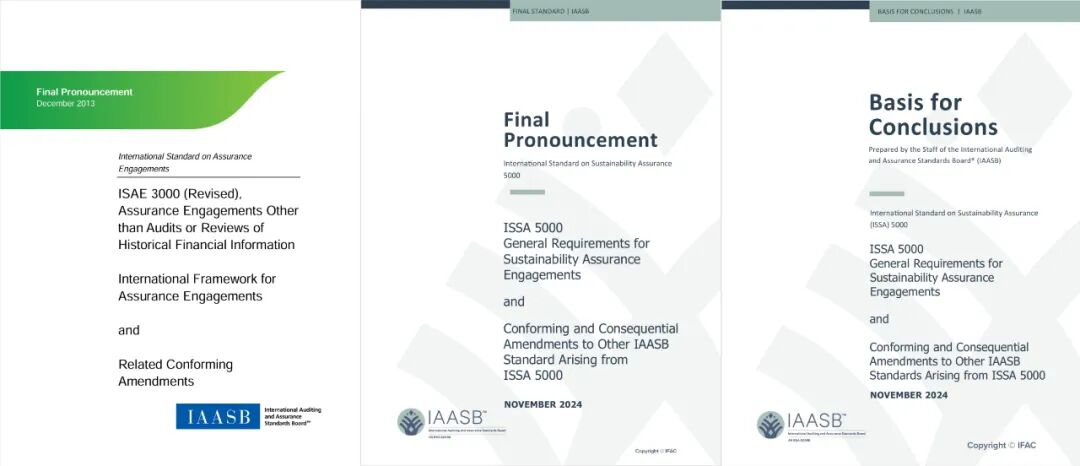
Figure 1: IAASB standards ISAE 3000 and ISSA 5000
(Image source: screenshot from the IAASB website)
Sustainability reporting assurance standard: AA1000ASBeyond the IAASB framework, the AA1000 Assurance Standard (AA1000AS) issued by AccountAbility is also an important approach in sustainability-related assurance. AA1000AS is an assurance standard for sustainability information based on the effective application of the AA1000 AccountAbility Principles (AA1000AP). Unlike assurance standards focused on data verification, AA1000AS places greater emphasis on how companies adhere to core principles in their sustainability management and reporting. These principles are: Inclusivity, meaning companies should involve the stakeholders they affect in decision-making; Materiality, requiring companies to identify and focus on the sustainability topics that matter for themselves and their stakeholders; Responsiveness, emphasising effective responses to material topics and stakeholder concerns; and the newly added Impact, requiring companies to monitor, measure and be accountable for how their actions affect their broader ecosystems. By assessing these principles, AA1000AS aims to help companies address their material sustainability issues and respond meaningfully to stakeholder concerns, thereby improving their sustainability performance and the credibility of their reporting.
Figure 2: Sustainability reporting assurance standard AA1000AS v3
(Image source: screenshot from the AccountAbility website)
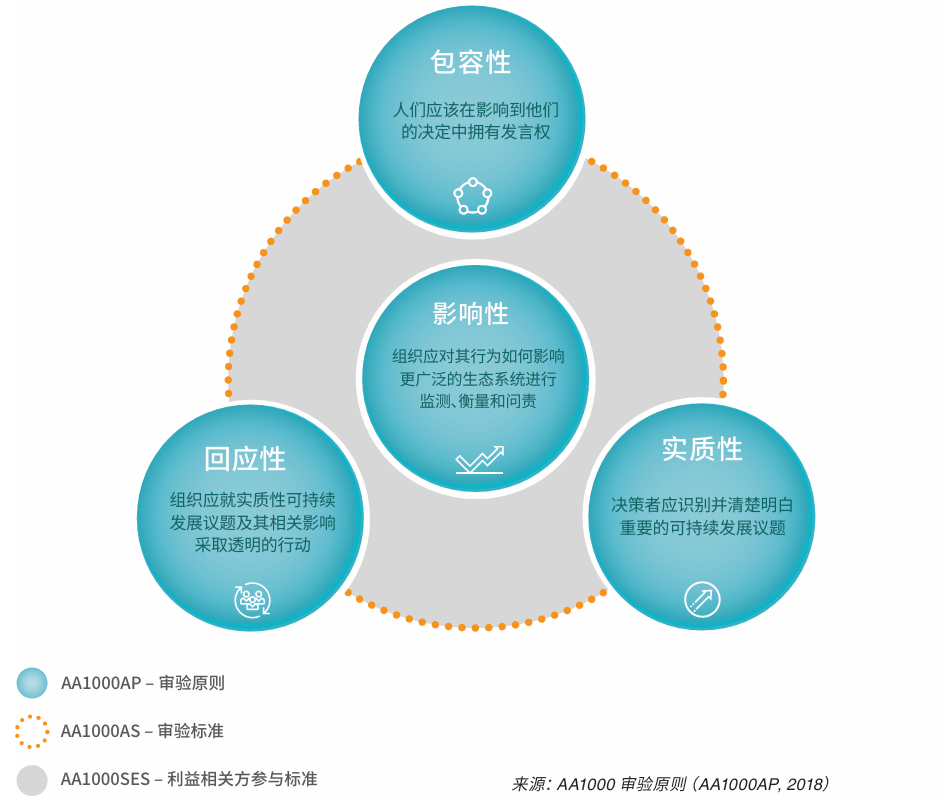
Figure 3: The four principles of AA1000AS
(Image source: screenshot from the AccountAbility website)
Alignment with major ESG reporting frameworks
ESG assurance works closely with mainstream global reporting frameworks to build a closed loop of "disclosure and verification" for corporate sustainability information.
The core goal of the mainstream global reporting frameworks — GRI (Global Reporting Initiative), SASB (Sustainability Accounting Standards Board), TCFD (Task Force on Climate-related Financial Disclosures) and ISSB (International Sustainability Standards Board) — is to drive companies to disclose high-quality, comparable ESG information. The core function of assurance standards is precisely to enhance the credibility of such disclosures through independent verification. Ultimately, both serve the fundamental goal of strengthening the decision-usefulness and market credibility of ESG information.
Take the ISSB, the global baseline standard that integrates TCFD and SASB: it has become a focus for assurance standard setters. The IAASB has worked with the ISSB so that ISSB standards fully consider the assurability of sustainability information, while its assurance standards take into account the characteristics of ISSB disclosures.
The alignment between ESG assurance standards and reporting frameworks is critical to building a globally consistent and trustworthy ESG information ecosystem, which in turn gives international investors a consistent basis for decisions.
The table below summarises the characteristics of mainstream ESG assurance standards and their role in assurance:
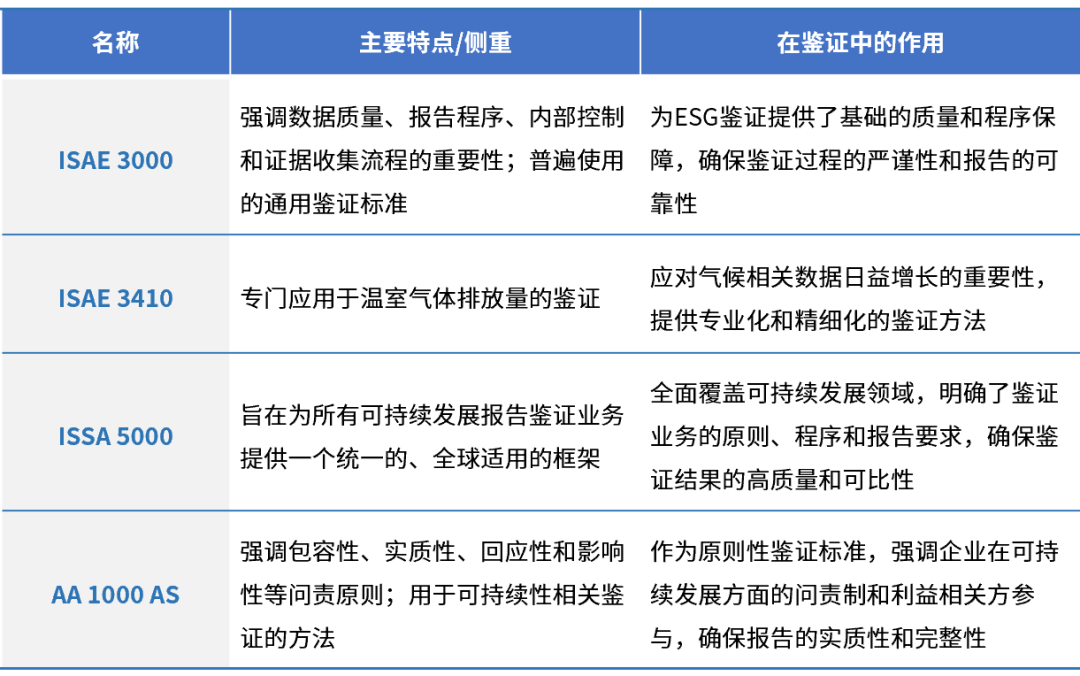
Figure 4: Comparison of mainstream ESG assurance standards
3. Current state and trends of ESG assurance in China
China's ESG market is at a critical stage of accelerating policy development and transition from voluntary to mandatory disclosure. This reflects regulators' growing emphasis on sustainability and high-quality disclosure, and signals that the assurance system will continue to be upgraded.
Policy trajectory: from encouragement towards mandatory disclosureAlthough China's ESG policy system started relatively late, it has developed rapidly and now forms a comprehensive system covering conceptual guidance, implementation norms, and incentives and constraints, spanning the main processes of ESG practice and applying to both operating companies and financial institutions. Policies are issued by a range of bodies, including national ministries and industry organisations, and usually start from specific areas to turn sustainability concepts into actionable plans. This policy trajectory shows that ESG disclosure is gradually shifting from voluntary to mandatory, and stakeholders are progressively demanding greater depth and breadth in ESG disclosure, laying the foundation for the large-scale use of assurance services.
On 30 July 2025, the Chinese Institute of Certified Public Accountants (CICPA) released the Sustainability Information Assurance Engagement Standard No. X — Basic Standard (Exposure Draft) for public comment. The exposure draft sets out clear and comprehensive provisions on the standard's scope and the objectives and requirements of sustainability information assurance, marking the start of building China's ESG assurance system. Once formally issued, the standard will drive the standardisation and professionalisation of ESG assurance services in China.
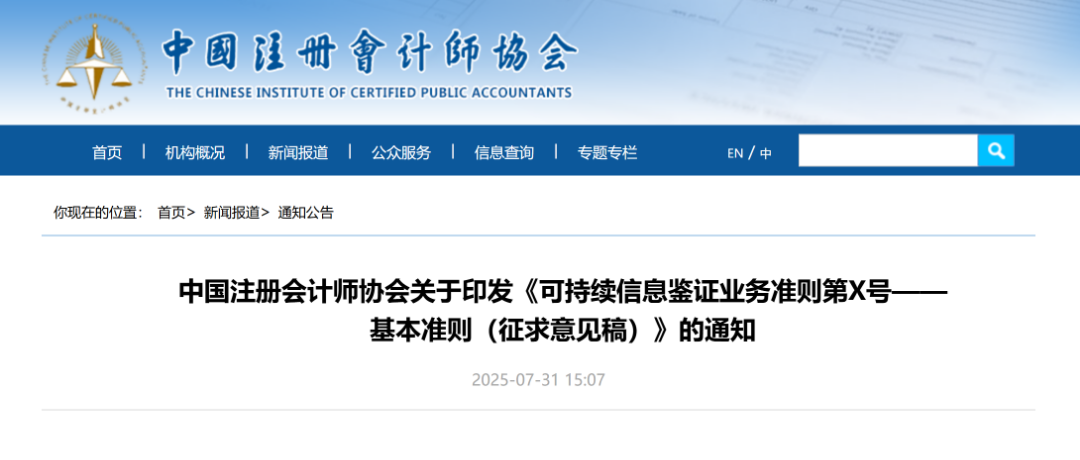
Figure 5: CICPA seeks public comment on the basic standard for sustainability information assurance engagements
(Image source: screenshot from the CICPA website)
Roles and requirements of key regulators
The development of ESG assurance in China is already visible in the disclosure guidelines of multiple regulators. Although ESG report assurance is not yet mandatory, the relevant rules all clearly signal a push to improve information quality when setting disclosure principles, fostering an increasingly mature ecosystem of demand for assurance.
China Securities Regulatory Commission (CSRC) and stock exchanges: The CSRC and the stock exchanges are gradually raising ESG disclosure requirements for listed companies. Under the Shanghai, Shenzhen and Beijing stock exchanges' Guidelines on Sustainability Reporting, certain listed companies (such as constituents of the SSE 180 Index, STAR 50 Index, SZSE 100 Index and ChiNext Index, and companies listed both in China and overseas) must disclose a sustainability or ESG report covering the four core elements of governance, strategy, risk management, and metrics and targets. Other listed companies are encouraged to disclose voluntarily, and disclosure of third-party assurance results is encouraged. Hong Kong Exchanges and Clearing (HKEX)'s ESG Reporting Code also encourages independent assurance to enhance credibility.
State-owned Assets Supervision and Administration Commission (SASAC): SASAC actively promotes ESG practice among listed companies controlled by central state-owned enterprises. It aimed to achieve "full coverage" of dedicated ESG reports by these companies by 2023, while stressing continuous improvement in disclosure quality and transparency.
Ministry of Finance: The Corporate Sustainability Disclosure Standards — Basic Standard (Trial), issued by the Ministry of Finance and eight other departments, establishes China's inaugural unified disclosure framework covering all types of companies. It specifies four core disclosure areas — governance, strategy, management of impacts, risks and opportunities, and metrics and targets — and stresses the link between non-financial and financial information. In particular, it encourages reporting entities to obtain independent assurance on their sustainability reports and to explain the status of any independent assurance, laying the foundation for institutionalising third-party verification.
People's Bank of China, China Banking and Insurance Regulatory Commission and other financial regulators: The People's Bank of China and the China Banking and Insurance Regulatory Commission have issued documents such as the Guidelines for Establishing the Green Financial System and the Green Finance Guidelines for the Banking and Insurance Sectors, creating an overarching framework for green finance in China. These require banking and insurance institutions to integrate ESG factors into their management processes and comprehensive risk management systems, and where necessary, to engage qualified, independent third parties to provide assurance on, assess or audit their activities in fulfilling ESG responsibilities.
The table below summarises the ESG disclosure requirements of China's main regulators and their link to assurance:
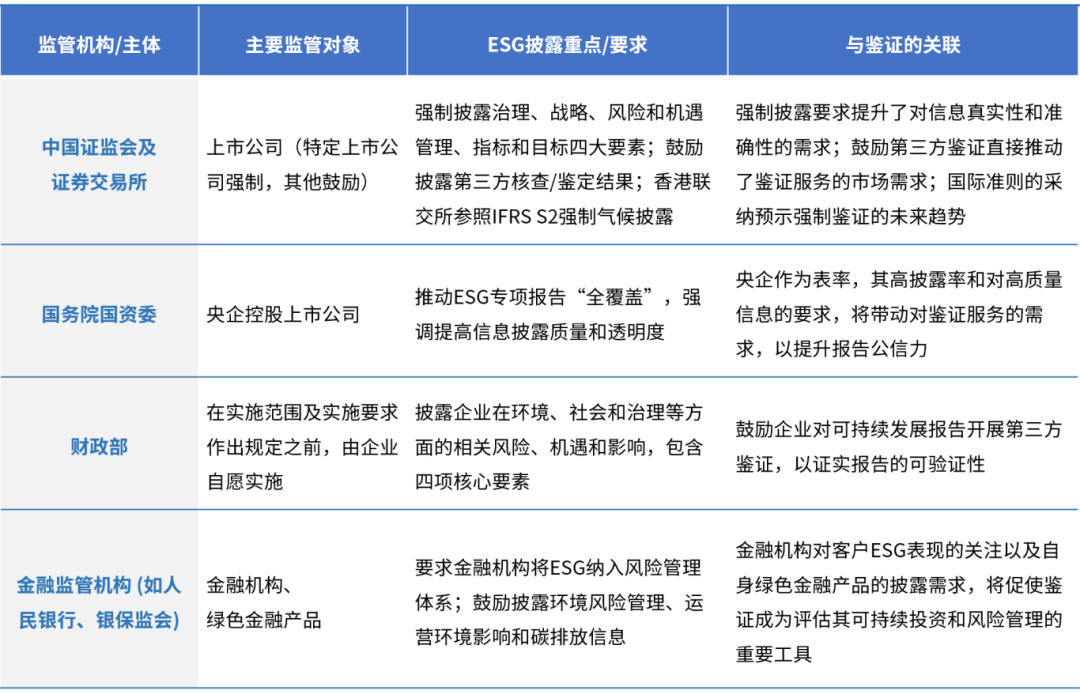
Figure 6: ESG assurance requirements of China's main regulators
4. Similarities and differences between ESG assurance and financial audit
Although ESG assurance and traditional financial audit both aim to enhance the credibility of information, they differ significantly in underlying logic, focus and execution. Understanding these similarities and differences is essential for companies and stakeholders to assess corporate performance comprehensively.
Underlying logic and objectives
Financial audit aims primarily to verify the accuracy and fairness of a company's financial statements. By checking whether historical financial data comply with accounting standards, it gives shareholders and regulators objective evidence of the company's financial health. It focuses mainly on historical financial data to ensure their reliability.
By contrast, ESG assurance rests on a broader logic: it aims to assess a company's environmental, social and governance practices and their sustainability impact. ESG assurance looks not only at compliance but also at identifying potential ESG risks and opportunities and improving the transparency and credibility of non-financial information, thereby strengthening the confidence of stakeholders including investors, customers, employees and communities. It reflects a company's responsibilities beyond financial performance — in sustainable operations, in responding to social expectations and in meeting growing disclosure requirements.
Focus and data diversityFinancial audit focuses on quantitative financial data (such as revenue and liabilities), using highly standardised quantitative verification methods, with clear information boundaries and a high degree of certainty.
ESG assurance covers a much wider range of data: from quantifiable environmental indicators such as greenhouse gas emissions to qualitative practices such as employee well-being and board diversity. This diversity means that verification must combine quantitative measurement with qualitative assessment, and some data may be forward-looking.
Execution and methodologyFinancial audit follows mature, standardised audit procedures, including detailed transaction testing, balance reconciliation and review of financial records and internal controls.
ESG assurance is more complex and varied in execution. For example, it may combine carbon emission measurement models with textual analysis of governance policies and draw on cross-disciplinary expertise, with assurance methods combining quantitative and qualitative assessment. In terms of data sources and methodologies, ESG assurance may also face issues such as data availability and evolving sustainability standards.
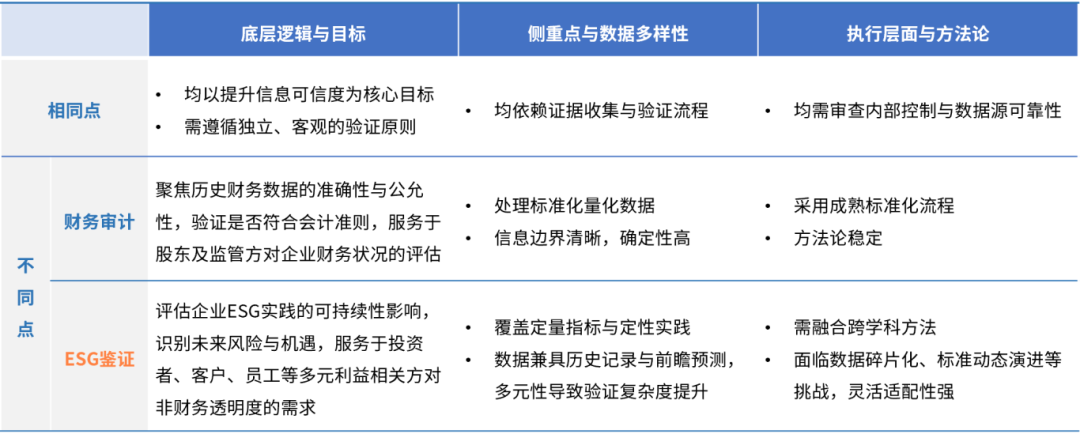
Figure 7: Similarities and differences between ESG assurance and financial audit
Despite these differences, the complementary nature of ESG assurance and financial audit reflects the close link between financial and non-financial information, and both require a deep understanding of a company's business model to achieve synergies in efficiency and risk management. In addition, internal audit plays a key role in managing ESG risks, validating controls and providing objective assurance and advice on ESG reporting.
Conclusion
As ESG disclosure becomes widespread, ESG assurance is receiving growing attention and is evolving from a passive compliance tool into a strategic tool that helps companies examine the quality of their disclosures, reduce risk and strengthen their sustainable competitiveness. Its core value lies in building a trustworthy sustainability information ecosystem: by improving the accuracy, comparability and transparency of ESG data through independent verification, it becomes a key hub of trust between companies and society. This credibility helps companies attract responsible investment and effectively avoid the reputational and legal risks that inaccurate information can bring, thereby protecting corporate value.
With tightening global regulation and surging capital-market demand for high-quality ESG information, companies need to reposition the value of assurance. We recommend that companies consider the needs of regulators, partners, financial institutions, rating agencies and other stakeholders when setting their disclosure topics. More importantly, they should carry out substantive ESG governance, improve their compliance management structure and implement control and improvement measures, fundamentally improving their ESG performance and laying a solid foundation for high-quality disclosure.
As global requirements for the transparency and credibility of sustainability information keep rising, ESG assurance may well become an indispensable part of the healthy development of companies and capital markets. As transparency of sustainability information becomes a global consensus, professionally verified ESG performance will not only define the compliance baseline but also shape companies' competitiveness and room for growth in the sustainable economy.
References:
KPMG China. The move to mandatory reporting — KPMG Survey of Sustainability Reporting 2024
MioTech. Overview of ESG Assurance Practices Globally and in Greater China
Huang Shizhong. "Greenwashing" and Anti-"Greenwashing" in ESG Reports
IAASB. International Standard on Assurance Engagements (ISAE) 3000 Revised, Assurance Engagements other than Audits or Reviews of Historical Financial Information
IAASB. At a Glance: International Standard on Assurance Engagements (ISAE) 3410, Assurance Engagements on Greenhouse Gas Statements
IAASB. International Standard on Sustainability Assurance 5000, General Requirements for Sustainability Assurance Engagement
AccountAbility. AA1000 Assurance Standard
Huang Shizhong, Ye Fengying. Analysis of the Similarities and Differences between Sustainability Information Assurance and Financial Statement Audit
SAPPO. Similarities and Differences Between Financial Audits and ESG Audits
MPES. Audit vs. Assurance: Definitions, Key Differences & Similarities