
ISO 14064 · ISO 14067
Carbon accounting and product carbon footprints
Our sustainability advisory team, with offices in Dubai (DIFC Innovation One), Shanghai and Paris, provides organisation-level carbon accounting (ISO 14064) and product carbon footprinting (ISO 14067): a full-spectrum path from carbon accounting to net-zero transition, aligned to mainstream international standards.
At a glance
- Organisational carbon accounting: a traceable Scope 1–3 inventory that establishes the carbon ledger for the whole organisation.
- Product carbon footprinting: life-cycle footprint accounting for products, supporting disclosure and green certification.
- Methods: the GHG Protocol Corporate Standard and ISO 14064-1 for organisations; ISO 14067 for products.
- Verification and certification: where the rules require verification, it is performed by an independent accredited body. We prepare the data and evidence, and work with established certification bodies on ISO 14064 and ISO 14067 certification.
- In-house with AI: Formist, our AI form assistant, supports the GHG Protocol and product carbon footprint (PCF) exchange.
Two services
Carbon accounting and carbon footprint: the organisation and the product
- Organisation-level carbon accounting (ISO 14064)
- A traceable Scope 1–3 inventory that establishes the carbon ledger for the whole organisation.
- Product carbon footprinting (ISO 14067)
- Life-cycle footprint accounting for products, supporting disclosure and green certification.
Who needs it
Who needs carbon accounting and a product carbon footprint
Both services mainly serve industrial companies, processing-trade exporters, companies under emissions control and state-owned enterprises.
- Organisation-level carbon accounting
- Companies on the key or general carbon emitter lists, companies that export, state-owned enterprises and companies preparing to list. Carbon accounting establishes the company's emissions, for reporting to the government.
- Product carbon footprint
- Manufacturers in large and international supply chains, in export trade, and in the supply chains of eight industries: power, petrochemicals, chemicals, building materials, steel, non-ferrous metals, paper and aviation. Accounting the product carbon footprint helps them get onto the procurement lists of mainstream international and domestic supply chains, and supports marketing that shows the environmental advantages of their products and production processes.
Methodology · ISO 14064
Organisation-level carbon accounting under ISO 14064-1 and the GHG Protocol
Organisation-level carbon accounting under ISO 14064 is one of the core services of our sustainability advisory team.
Carbon accounting follows the ISO 14064 greenhouse gas standard. Based on the company's own greenhouse gas management plan and goals, the inventory boundary and base year are set. Data on emission sources, activity levels and emission factors is then collected from environmental impact assessment reports, questionnaires, on-site inspection and test reports, production data reports, cross-checked purchasing data and work records. An emissions monitoring plan is set up, the company's emissions are calculated, and a GHG inventory report is issued, with certification where required.
The calculation is rarely the hard part. The work lies in getting reliable data out of sites, landlords, utilities and finance, and in keeping an evidence trail that will stand up to a verifier. A practical sequence:
Set the boundary
Decide which legal entities, sites and activities belong in the inventory, and how you consolidate them: operational control, financial control or equity share. Write the choice down; it drives everything after it.
Map emission sources
List Scope 1 sources (fuel in generators, boilers and vehicles, process emissions, refrigerant leaks) and Scope 2 sources (purchased electricity, heat, steam or cooling), and note which Scope 3 categories matter for your business.
Collect activity data with evidence
Gather invoices, meter readings, fuel logs and maintenance records for each source and period, with a named owner for each data set, so every reported figure can be traced back to a document.
Calculate with a documented method
Apply a recognised methodology, such as the GHG Protocol Corporate Standard or ISO 14064-1, with stated emission factors and assumptions, and record them in a methodology note.
Issue the inventory report
Set up an emissions monitoring plan, calculate the company's emissions and issue the GHG inventory report, with certification where required.
Keep records, prepare for verification, plan reductions
Retain the data trail, appoint an accredited verification body early where verification applies, and turn the inventory into a reduction plan you can track year on year.
Deliverables · ISO 14064
What our carbon accounting service delivers
- GHG inventory scoping: organisational and operational boundary, emission sources, Scope 1 and 2, and the Scope 3 categories worth tracking now.
- Data collection: templates and checklists for sites, facilities and finance teams; we follow up on gaps and keep an evidence file for every figure.
- Calculation under the GHG Protocol and ISO 14064-1, with a methodology note and emission-factor register you can hand to a verifier.
- The GHG inventory report, with certification where required.
- Verification readiness: we organise the evidence and work with the independent verification body you appoint, answering its questions on methods and data.
- Reduction planning: decarbonisation measures and targets built on your inventory, through our net-zero transition advisory.
The emissions you report to regulators and the Scope 1 and 2 figures in your sustainability report should come from the same inventory.
Methodology · ISO 14067
Product carbon footprint (ISO 14067): the four-part assessment
A product carbon footprint is the total of direct and indirect greenhouse gas emissions released over the whole life cycle of a product (or a service).
WeCarbon's carbon-neutral pathway planning offers advisory in two focus areas: product life cycle assessment (LCA) and low-carbon transition strategy.
Under product carbon footprint assessment standards, an assessment covers four parts: goal and scope definition, data collection, life cycle impact assessment, and interpretation of results and reporting.
Goal and scope definition
Identify the life-cycle and system-boundary elements.
Data collection
Collect the company's production information in full, review the current state of its carbon management system, and interview employees, customers, peer companies and relevant organisations.
Life cycle impact assessment
Help the company carry out the life-cycle environmental impact analysis.
Interpretation of results and reporting
Issue the product carbon footprint assessment report and obtain the corresponding certification.
Exporters
Why exporters need a product carbon footprint: CBAM and supply-chain requirements
As the world pushes ahead with climate action and green, low-carbon development, more and more customers in more countries and regions ask their suppliers for a credible product carbon footprint assessment report prepared under international standards such as ISO 14067. Companies should therefore assess the carbon footprint of their export products early, to respond effectively to international green trade barriers and keep their export and supply-chain position from being affected by these policies.
Large procurers require multiple certifications on carbon footprint, eco-friendliness and energy saving.
The EU Carbon Border Adjustment Mechanism (CBAM) entered its definitive phase on 1 January 2026. Your EU customer files the CBAM declaration and buys the certificates, but the figure that sets the bill, the emissions embedded in your goods, has to come from your plant.
In July 2024 WeCarbon's cross-border green compliance services went live on the Shanghai Green and Low-Carbon Supply Chain Public Service Platform, which the Baoshan District government built with the CN100 green and low-carbon supply chain alliance.
Verification and certification
Verification and certification: who verifies, how we help
Where the rules require verification, it is performed by an independent body accredited for greenhouse gas verification. We organise the evidence and work with the independent verification body you appoint, answering its questions on methods and data.
With established certification bodies, we provide product carbon footprint (ISO 14067) and carbon accounting (ISO 14064) certification.
For CBAM, verification is done by an independent verifier accredited by an EU national accreditation body. We help you prepare the monitoring, calculations and evidence the verifier will review, and support you through verification.
Formist
Doing the carbon accounting work in-house with AI: Formist
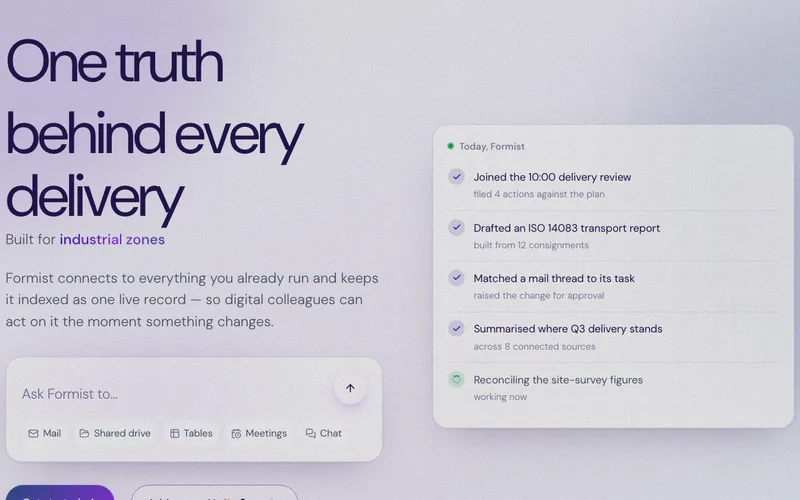
An AI form assistant developed in-house by WeCarbon, Formist supports a wide range of international frameworks, including CBAM, the GHG Protocol, CSRD/ESRS and product carbon footprint (PCF) exchange. It has passed the PACT Conformance Test and is listed in the PACT Network, run by the World Business Council for Sustainable Development (WBCSD).
In ClimateTech In Focus 2025, the report of the United Nations University, PECC and Shanghai Climate Week, Siemens China describes integrating WeCarbon's Formist™ AI Agent into SiTANJI, its carbon portfolio management platform, as a joint AI Form Solution for sustainability reporting, primarily CBAM.
If your team wants to run the carbon accounting work itself with AI, start at formist.ai. If you want it done with you, that is the service described on this page.
Team and credentials
Our sustainability advisory team and credentials
Our sustainability advisory team works from offices in Dubai (DIFC Innovation One), Shanghai and Paris.
- Frameworks & standards we align to: ISO 14064, ISO 14067, Gold Standard, VCS, HKEX ESG Code, ISSB, ESRS, GRI, TCFD, SASB, SDGs.
- UN PRI Service Provider Signatory.
- 15+ years of capital market advisory experience, 10+ years of ESG experience, and 40+ countries and regions we have advised.
FAQ
Carbon accounting and product carbon footprints: frequently asked questions
What is the difference between carbon accounting and a product carbon footprint?
Organisation-level carbon accounting (ISO 14064) builds a traceable Scope 1–3 inventory that establishes the carbon ledger for the whole organisation. Product carbon footprinting (ISO 14067) accounts for a product's life-cycle footprint, supporting disclosure and green certification.
What does a carbon advisory or carbon consulting service from WeCarbon cover?
Our sustainability advisory team works as your ISO 14064 consultant for organisational carbon accounting and as your carbon footprint consultant for ISO 14067 product carbon footprints. The carbon advisory service covers GHG inventory scoping, data collection, calculation under the GHG Protocol and ISO 14064-1 with a methodology note and emission-factor register, the GHG inventory report with certification where required, verification readiness, and reduction planning through our net-zero transition advisory.
Which methodology is used for ISO 14064 carbon accounting?
A recognised, documented one. We build organisational inventories on the GHG Protocol Corporate Standard and ISO 14064-1 and record the emission factors and assumptions used, so the result can be followed by a verifier.
What is a product carbon footprint?
A product carbon footprint is the total of direct and indirect greenhouse gas emissions released over the whole life cycle of a product (or a service).
What does an ISO 14067 product carbon footprint assessment cover?
Under product carbon footprint assessment standards, an assessment covers four parts: goal and scope definition, data collection, life cycle impact assessment, and interpretation of results and reporting.
Why should exporters assess their product carbon footprint?
More and more customers in more countries and regions ask their suppliers for a credible product carbon footprint assessment report prepared under international standards such as ISO 14067. Assessing the carbon footprint of export products early helps companies respond to international green trade barriers and keep their export and supply-chain position from being affected by these policies.
Who verifies a carbon accounting report, and how does WeCarbon help?
Verification, where required, is done by an independent body accredited for greenhouse gas verification. We prepare the inventory and the report and work with the verifier you appoint. With established certification bodies, we also provide product carbon footprint (ISO 14067) and carbon accounting (ISO 14064) certification.
Should our sustainability report use the same inventory?
Yes. The emissions you report to regulators and the Scope 1 and 2 figures in your sustainability report should come from the same inventory.






Accelerate your green transition today
Let us help you create competitive advantages through sustainability, build resilience against climate and supply chain risks, and streamline your path to a sustainable future.